


Three Stations, One Goal: Jan Schneider on Logistics, Processes and TMS
From Coca-Cola to Tchibo to SHK: Dr. Jan Schneider shows how TMS projects transform companies and what matters most during implementation.
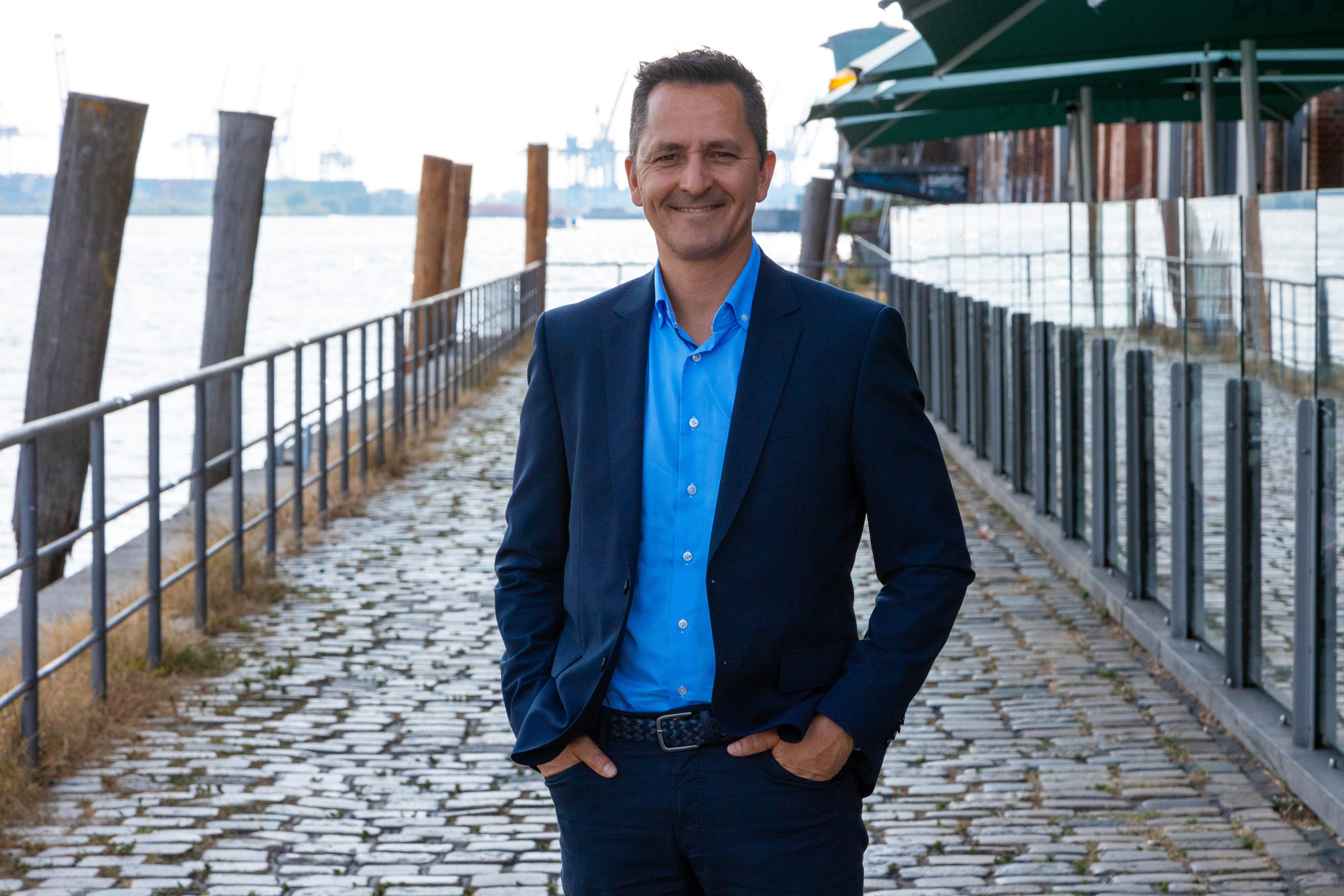
In a nutshell: Transport Management Systems (TMS) help manage complex delivery networks more efficiently, create transparency, and improve control over costs and resources. Yet implementation is no easy feat: every company has its own structures, expectations and obstacles. Dr. Jan Schneider, now Director Supply Chain at SHK Deutschland, draws on his experience at Coca-Cola, Tchibo and SHK to illustrate how varied the journey can be – and why communication and change management are decisive.
👉 We explain exactly what a TMS is, what functions it fulfils and what value it delivers here in our introductory article.
Coca-Cola: Pilot Region and Training Centre
Jan's first intensive engagement with digital route optimisation came at Coca-Cola Bottler in Bavaria. The goal was to make optimal use of the "Red Fleet" – as the company's own Coca-Cola trucks are known. This was not just about the routes themselves, but also about having the right number of vehicles, the appropriate vehicle size, suitable trailer combinations and an efficient load factor. "Our aim was to send out the right number of trucks in the right size and with a high load factor every day, despite fluctuating daily volumes – all while strictly adhering to the tightened driving and rest time regulations in force at the time", Jan recalls.
During the pilot project in Bavaria, KPIs such as stop duration, stop density, route length and truck load factor were tracked weekly and reviewed in management meetings. Stop quantities – meaning how many crates or units were delivered per stop – were also central metrics.
After the successful rollout across Germany, the Bavaria region became a training centre for other bottlers from across Europe. Teams from Northern and Western Europe travelled to Fürstenfeldbruck to observe the newly designed processes as part of the Operational Excellence programme. "We showed our international guests how we had restructured sites and planned routes – covering everything from high-level planning approaches and project management to vendor selection and detailed implementation insights", says Jan.
Tchibo: End-to-End Thinking and System Breaks
At Tchibo, Jan went a step further. The goal was to introduce a seamless transport management system spanning all modes of transport: rail, road, air and sea – including returns from e-commerce and retail stores. "We wanted to redesign this from scratch, truly covering all transport that Tchibo handles", he explains.
Before implementation, the reality was characterised by system breaks: telephone, email, Excel spreadsheets and a "crash-prone Access database" maintained by an external party who also ran a flight school on the side. "There was nothing there that gave you any confidence", Jan recalls.
The system was selected following a Europe-wide tender conducted in collaboration with Fraunhofer IML. In addition to the requirements defined by the business unit, a key factor was Tchibo's existing IT architecture, which was heavily oriented towards SAP and cloud-based Solutions.
Alongside the technical complexity, change management was the central challenge. "This is not an IT project – it is a project for the entire organisation", Jan emphasises. The implementation affected not only logistics, but also sales, procurement and external service providers.
Stumbling blocks in translating the requirements specification also proved challenging. "Our people wrote A, and the others understood B", says Jan. Deviations kept occurring because details were interpreted differently by different parties.
For Jan, one thing was clear: a project like this cannot run without a buffer. "I would always factor in around 10% as a time and budget buffer – even if you don't know at the outset when or what it will be needed for. The need is guaranteed to arise", he advises.
SHK: A Holding-Level Decision Meets Established Structures
Today, Jan is overseeing the introduction of a new system at SHK. Unlike at Tchibo, the system decision had already been made at holding level. Even so, the starting position is complex: diverse regional and SME-shaped processes, varying historical approaches and what he calls the "knowledge monopoly".
"There are employees who hold everything in their heads. But what happens if that person is absent or retires? That knowledge needs to be transferred into the system", Jan explains.
He illustrates this particularly vividly with the example of driver "Uwe", who has been delivering to the same customer for decades and knows exactly how far he can drive onto the gravel yard, when the customer is available and how sensitive goods need to be specially packaged for that particular delivery. "If Uwe stops driving tomorrow, that knowledge is gone entirely", Jan stresses. The goal is to capture exactly this kind of experiential knowledge systematically, so that it remains accessible to new or other drivers.
In addition to process harmonisation, SHK also plans to make fleet structures more flexible in the future – for example through e-Sprinters for inner-city deliveries or smaller vehicles for individual requirements. All of this is set to begin in autumn with the first pilot trucks before being rolled out across Germany.
Conclusion: More Than Software
Jan Schneider never views TMS projects as mere software implementations. They are a holistic transformation process that changes the organisation in the long term and supports customer service. "Ultimately, TMS is an abbreviation for a great many things that can be genuinely complex in detail. A logistics manager has to manage that complexity while simultaneously breaking it down in a way that is understandable and actionable for everyone", he concludes.

Did you find this article helpful?

Transport Management System (TMS): What Is It and What Can It Do?
About the features, benefits and pitfalls of Transport Management Systems — and why having a clear objective is crucial.

What do WMS, WCS and WES mean?
An overview of the differences between WMS, WCS and WES, and why these terms are so often confused in everyday use.

What You Can Really Learn from Real TMS Projects
Two practical insights, seven learnings: what really matters when selecting and implementing transport management systems.

Black Friday and Its Impact on the Logistics Industry
Shopping ecstasy for some, logistical challenge for others.