


From the Depot to the Boardroom
When childhood smells of diesel – an interview with Ruth Pflaum of Spedition Pflaum GmbH.
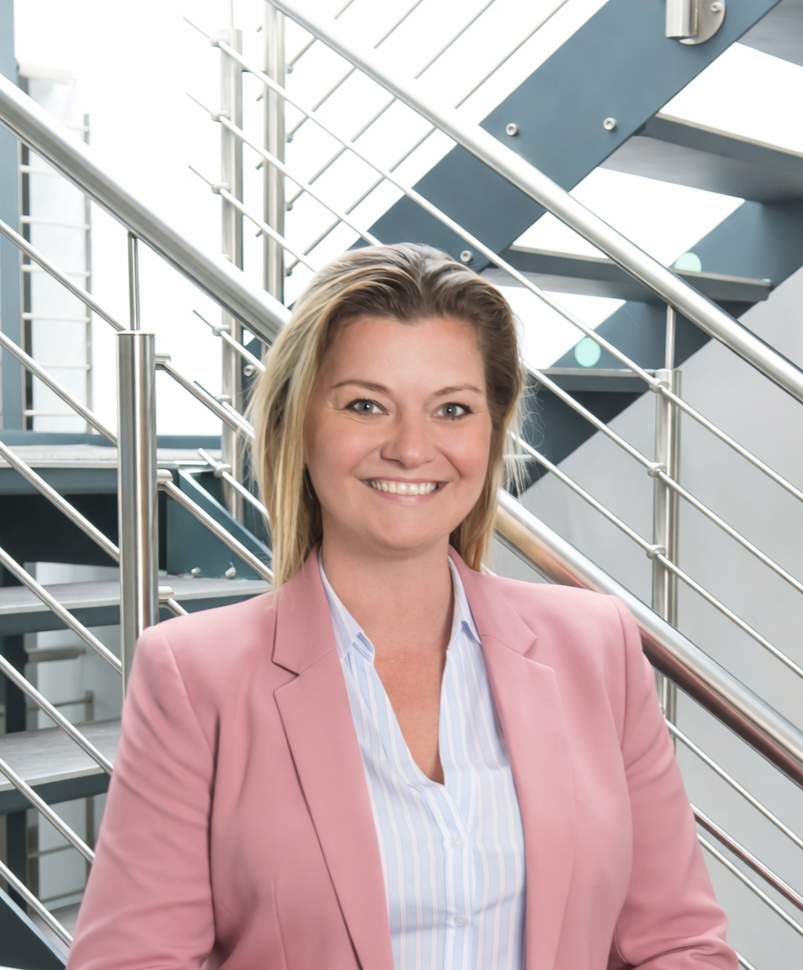
In a nutshell: Logistics is an industry without which nothing moves – and yet for many women it remains a "man's world". Not because women aren't suited to it. But because they so often fail to become visible in the first place: in job applications, in operational roles, in leadership positions.
Ruth Pflaum of Spedition Pflaum GmbH knows this reality at first hand – as a partner in a long-established family business and as chair of the initiative "Logistik ist weiblich". In this interview she speaks candidly about gender stereotypes, the absence of role models, outdated industry clichés, and what needs to change.
When childhood smells of diesel
For Ruth, logistics was never an exotic career. She grew up inside the family business, surrounded by offices, the depot yard and trucks. "My entire childhood took place at the company. I played on the premises and did my homework in my mum's office."
The industry was always present – not necessarily as a career plan, but as everyday life. "I've really never known anything other than trucks, forklifts, the workshop – everything that goes with logistics." That she would one day join the management team was not, however, a foregone conclusion. "I didn't want to take over just because it was my parents' wish. I only wanted to do it if I was genuinely convinced it was right for me."
Acceptance doesn't come overnight
Growing up in a company doesn't automatically mean everyone cheers when you step into a position of responsibility. The path into management was anything but straightforward. Ruth describes the early phase of her new role almost like a probationary period. "Among colleagues there was a lot of curiosity at first, and some scepticism too. That's completely normal." Especially in a company where many employees have been around for a long time, every change is scrutinised closely. "Some of them had known me since my apprenticeship, or even earlier, when I was still a child. And suddenly you're supposed to be making decisions."
In a situation like that, acceptance is not something you are given. It is something you earn, day after day. Not through being loud. Not through putting on a show. Through hard work. "Acceptance didn't come overnight. It was built through daily actions. Today the team knows: I roll up my sleeves, I listen and I make clear decisions."
The turning point came for her through an unexpected moment in everyday working life: "A long-standing employee took me aside after a meeting and asked for my feedback. That's when I knew: it has landed. Now I have acceptance."
Women can lead. But does anyone notice?
Asked whether women find it harder to reach leadership roles, Ruth responds with surprising clarity and nuance. "I don't think the issue is directly about 'women as leaders'. It's about the visible woman."
Because in logistics, men are simply in the majority – particularly in operational roles. "We have so many more men that women automatically fade into the background more quickly." Yet for Ruth personally, gender is not the deciding factor: "In our company it doesn't matter whether you're a woman or a man. What matters is competence." But this is precisely where the structural problem arises: if fewer women apply in the first place, or gain visibility, fewer women end up in leadership positions. "If we have fewer female applicants and less female talent in the pool, we will inevitably end up with fewer women in leadership roles."
Ruth raises a point in the interview that many women will recognise immediately: self-promotion does not come naturally to everyone. "Women often find it harder to put themselves forward and say what they're capable of." Instead, many hope to be "discovered" at some point. This is exactly where Ruth sees employers as having a responsibility. "Employers can actively look around and say: 'Hey, there's someone sitting here with real ability, even if she's perhaps not the loudest person in the room.'"
Logistics simply isn't on many women's radar
Ruth therefore looks to address the issue much earlier: at the point of training and career decisions. "Getting more women into logistics – that's where it all starts." The applications her company receives reveal a clear pattern: "When we receive applications for 'freight forwarding and logistics clerk' positions, they are mostly from men. Women tend to apply for office management roles." The crucial insight: as soon as young women understand what logistics really involves, a lot changes. "When we talk to female applicants and explain the job properly, many of them actually decide to go into freight forwarding after all." Ruth names the problem directly: "That tells me: we simply aren't making it onto young women's radar."
One reason for this is the cliché that still clings to logistics today. "Unfortunately we still have a negatively loaded image. And it's high time we put that to one side." Because modern logistics has long had nothing to do with "just driving trucks". "Logistics encompasses everything: digitalisation, IT, organisation, people management. It's incredibly diverse," Ruth enthuses. And if she had to give a young woman one piece of advice today, it wouldn't be a lengthy motivational speech – just a simple sentence: "Come and take a look. You have nothing to lose."
Because once you've stepped into the industry
Did you find this article helpful?

How to truly prepare for LogiMAT - with Max Meister
On structured planning, clear priorities, and why spontaneous trade fair visits are often a waste of time.

Menschenleere Fabrik: bald die Realität? – mit Daniel Küpper
Über die Rolle von KI, Robotik und autonomen Systemen in der Produktion.

How to Plan an AutoStore System – Answers from the even Webinar with AutoStore
From the first key figures to the finished grid design: How requirements become a warehouse system.

How Do You Put Logistics on Paper?
On the background of a 150-page specialist report and how logistics can be told as a story.