


How Digitally Controlled Yard Management Saves Time and Hassle
Key practical questions from the even Webinar with Würth Industrie Service and myleo / dsc.
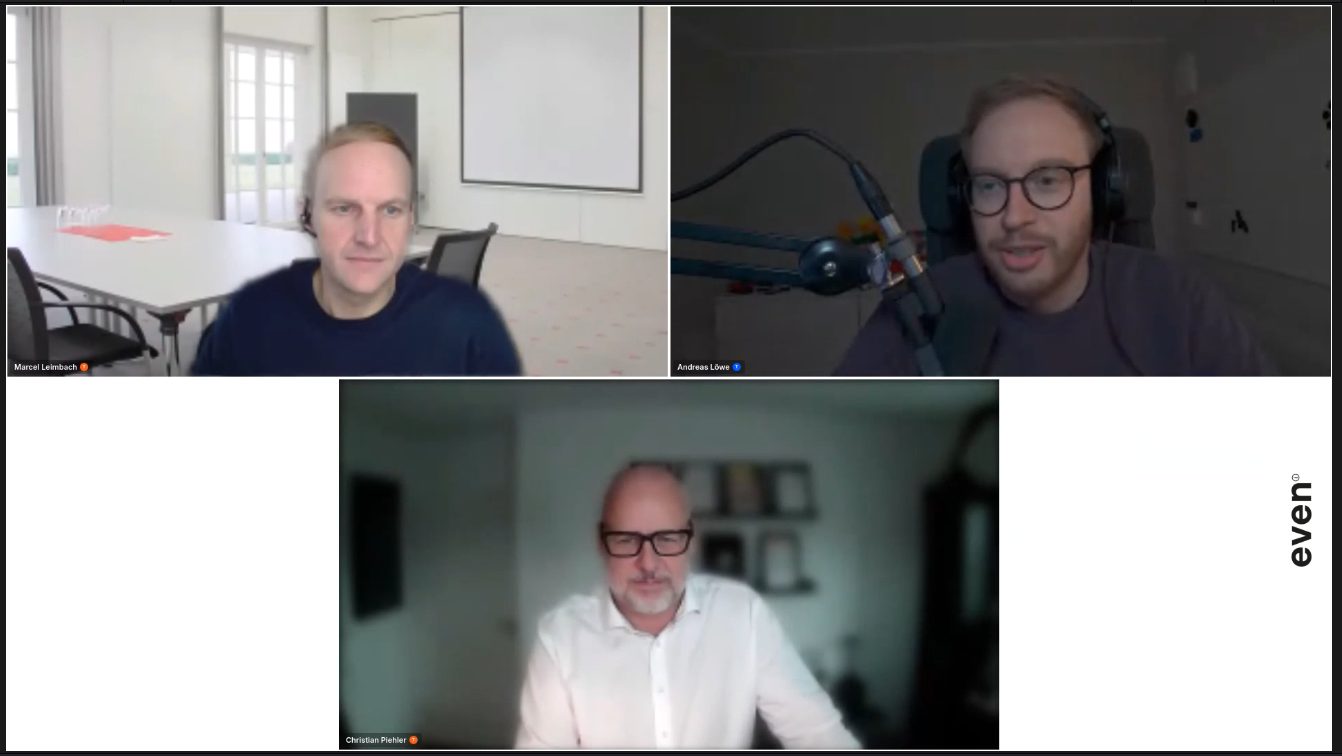
In a nutshell: When trucks arrive too early or too late, drivers are waiting at the gate and security staff are struggling to keep track of everything, it becomes clear: without transparency, the yard quickly becomes unmanageable. The even Webinar with Würth Industrie Service and myleo / dsc addressed exactly this: How can yard traffic be managed more smartly, language barriers reduced and safety improved?
It quickly became apparent that the topic of Yard Management struck a chord. Many attendees wanted to know how digital control on the plant premises works in practice and submitted numerous questions in the chat.
Because the interest was so great and many topics could only be touched on briefly during the live session, we have compiled and summarized the most important questions and answers here.
Missed the Webinar? Click here for the full recording.
You just explained that drivers register and check in at a terminal. Is it the driver themselves who books the time slot, or does the freight forwarder handle that?
Marcel Leimbach: As a rule, this is handled by the freight forwarder or dispatcher, not the driver. Truck drivers arrive on site with a time slot that has already been booked. At the terminal, they select their language and check in independently.
What happens if a truck has missed its time slot?
Marcel Leimbach: There is no standard procedure. Drivers who arrive late must first join the back of the queue — vehicles with booked slots have priority. If capacity becomes available later, the vehicle will be processed retrospectively. However, if a truck arrives just before the end of the working day or significantly after its slot, it will be given a new time slot for the following day.
In addition to standard deliveries, there are also groupage shipments and parcel services that arrive flexibly. How does this work in the system — do groupage trucks also book a time slot, and what happens with spontaneous parcel deliveries?
Marcel Leimbach: Groupage shipments are handled via standing time slots — fixed slots at fixed times. Parcel service providers who arrive spontaneously check in at the terminal and can do so without prior pre-notification. Since they do not block a loading dock, the process is straightforward and quick.
You mentioned the topic of safety just now. How have you handled the verification mechanisms, for example load securing and other checks?
Marcel Leimbach: There is a dedicated process step in the system for this. The driver confirms via smartphone that load securing has been completed. At the moment, this still runs in parallel in paper form with us, but the plan is to migrate it fully to the digital system.
Christian Piehler: At other companies, photos of the load or dual signatures from both the driver and the loading supervisor are used. Everything is assigned to the respective transport in the system and remains fully traceable.
How is driver misconduct detected — for example, if someone parks in a different location than designated?
Marcel Leimbach: Such cases are rare, but they are covered by technical controls. Cameras on the plant premises capture vehicle movements and help identify discrepancies between the system and reality.
Christian Piehler: In addition, automatic status alerts warn when a driver has been in one location for too long. This ensures visibility is maintained at all times — and misconduct becomes the exception rather than the rule.
Was there an interface to the ERP system from the outset, or did it start as a standalone solution?
Christian Piehler: Initially, the system ran independently. A direct connection to SAP is planned once Würth has completed its system migration. Many companies take this two-step approach: start operationally first, then integrate.
Are freight forwarders required to use your solution?
Christian Piehler: No, but they do so anyway — pre-notification and time slot booking are standard practice today. Freight forwarders benefit from it themselves: they get through the process faster and reduce dwell times.
Does the application really work on any smartphone?
Christian Piehler: Yes. myleo / dsc is a web application, not an app. This means it doesn't matter whether someone uses an iPhone, an Android device or a tablet — access simply runs through the browser.
How high is the daily truck traffic at the site?
Marcel Leimbach: On average around 120 vehicle movements per day, regardless of size or weight.
Does myleo accompany the driver throughout their entire stay, including check-out?
Christian Piehler: Yes, the driver is guided throughout. The system works with an activity plan that leads them through every step on the yard — from check-in to exit.
How are statuses captured — automatically or manually?
Marcel Leimbach: Both. Check-in and barrier movements are automated, as are the transitions between individual process steps. Only the call to the loading dock requires a click by the loading staff. Cameras are intended to provide additional data points in the future.
How much effort was involved in implementing slot management, particularly for suppliers and freight forwarders?
Marcel Leimbach: The effort was manageable, as we were already familiar with pre-notification. The key was involving partners at an early stage. To that end, we held workshops and Webinars with myleo / dsc or

Did you find this article helpful?

Planning Shuttle Warehouse Systems the Right Way – Answers from the even Webinar with RocketSolution
Shuttle warehouses are often planned based on gut feeling – yet it is concrete metrics that determine success or miscalculation.

Storing Ugly Goods automatically – answers from the even Webinar with advasolutions
What Ugly Goods are, why conventional systems reach their limits here, and how carrier-free storage works in practice.

How to Plan an AutoStore System – Answers from the even Webinar with AutoStore
From the first key figures to the finished grid design: How requirements become a warehouse system.

The Underestimated Climate Problem in the Warehouse
On sustainability in automated small parts warehouses. An interview with Timo Landener on energy, density and CO₂ in intralogistics.