


Transport Logistic 2025 – Trade Fair Madness or a Must-Attend? A Personal Retrospective from Munich
Between buzzwords and beer benches: Why the trade fair still delivers – and what it's missing.
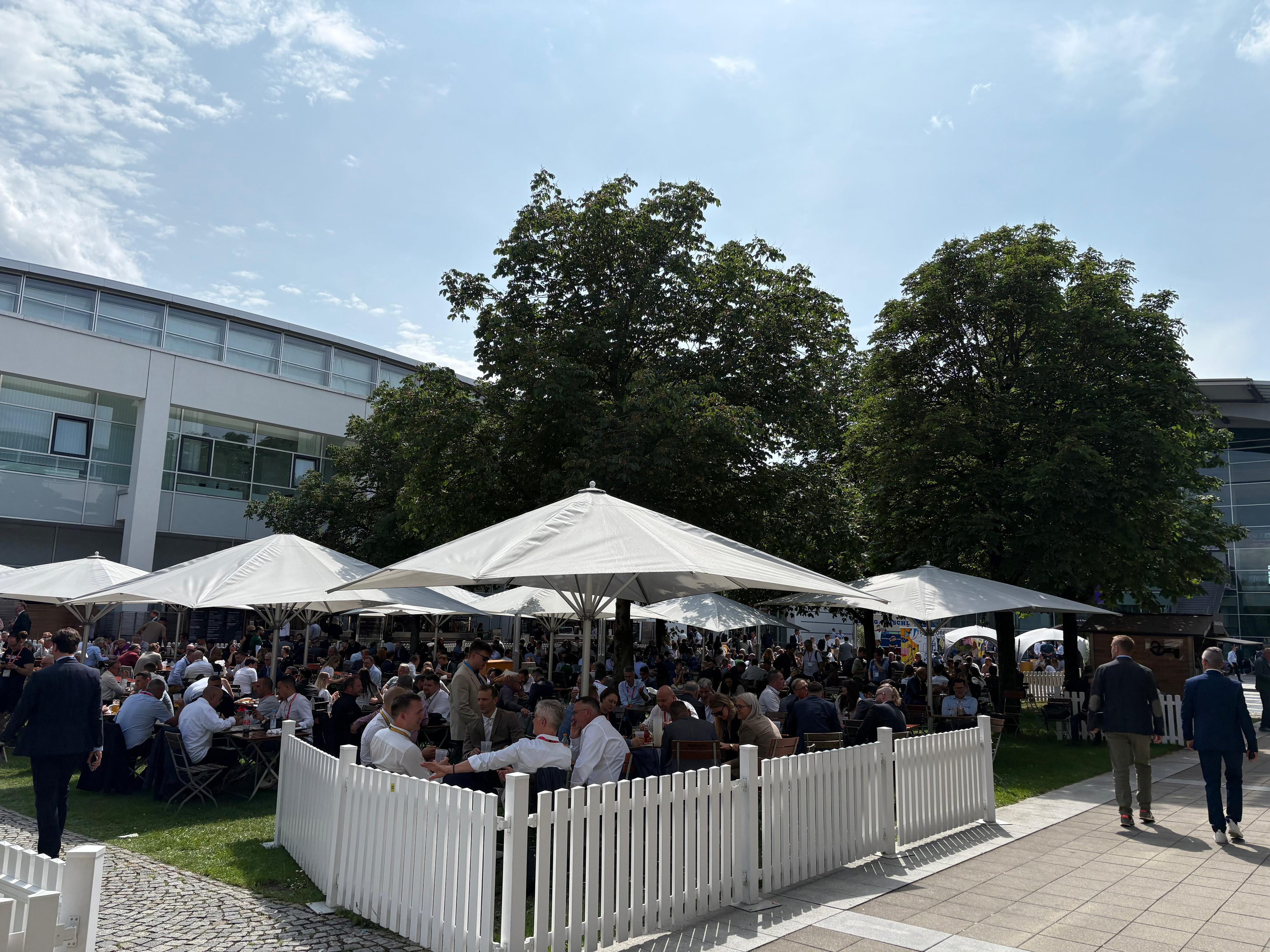
Transport Logistic 2025 was exactly as expected: loud, packed, connecting – but also surprisingly light on innovation. While atmosphere, dialogue, and personal encounters were clearly front and center, genuine product launches were few and far between. For established exhibitors, it was less about generating leads and more about nurturing relationships. The effort remains enormous, the ROI hard to pin down. And yet the event remains a relevant fixture in the industry – with everything that entails: trade fair buzz, networking magic, and tick-prevention cards.
Hoarse voices, overwhelmed booth staff, grabbing a quick snack here and there. Then straight back into the next conversation, diving into the crowd, badge at the ready, smiling, shaking hands. And that goes on for hours.
Why do we put ourselves through this? As an exhibitor: months of preparation, countless emails, coordination, logistics. Sleepless nights, long days. And then it's all over in four days.
A look back at Transport Logistic 2025 in Munich – and the honest question: Does the trade fair format actually have a future?
Energy, exchange, atmosphere – the "classic trade fair feeling" is alive
Yes, it had it again – that energy. The trade fair was definitely an invitation to talk, to debate, to reconnect. Bright halls, a friendly atmosphere, a colorful cross-section of the industry. Concepts that emphasized the human element – with plenty of seating, bars, counters, and space for connection. For some, though, it felt more like a members-only club. Overall: we're getting younger, more diverse.
Between stagnation and the spotlight – where's the real innovation?
What stood out, however: Real novelties? Barely any. Disruption? Nowhere to be found.
What was on display was the tried and tested – things that work and have proven themselves. Artificial intelligence, quantum computing, and all those buzzwords don't seem to have truly arrived yet. At least cloud, real-time, interfaces, integrations, and connectivity are no longer "tomorrow's topics" but part of everyday life. What was missing, though, was innovation. The focus was clearly on encounter and exchange – not on showcasing the Solutions of tomorrow.
Setup, navigation, and visitor flow – Wednesday was king
The halls were organized thematically – in theory. The hall layout was, to put it politely, something you had to get used to. Especially for first-time visitors, finding your bearings wasn't easy. Big names and the usual dominant players alongside mixed community stands – what became clear above all was: You have to be here because you have to be here. Many large stands – impressive in some cases, but often more marketing than substance. Everyone knows each other, greets each other, sees each other again – almost like a class reunion. Nice, as always.
An almost overwhelming number of exhibitors – increasingly international ones at that – and yet, in the quieter back sections of the halls, enough space to take a call in peace or escape the hustle for a moment.
Monday was for warming up. Tuesday and Wednesday: packed to the brim. Thursday? Empty corridors, tired faces.
And yet: international guests, good conversations – and walk-in visitors too. They existed. The effort? Enormous. The question of cost versus impact? A valid one.
What's the point, anyway? – Goals, value, leads (and drinks)
What's the actual goal at a trade fair? Generating leads? Maybe. But not like before – and not to the same extent for every company. Visitors are better informed, more advanced, and ask more targeted questions. Digitalization and automation are finally – slowly but surely – no longer buzzwords but reality. The conversations: technical, in-depth, often on equal footing. Potential customers have already done their research beforehand and, ideally, come with a concept in mind ready to be discussed.
But "new contacts"? Rather rare – especially for established exhibitors. For well-known brands like ours, it's long been about something else: relationship management. Trust. Human connection. Putting a face to a name. And the conversation that happens between the lines.
Catching up with existing customers in a relaxed setting, meeting the occasional prospective customer somewhere along their journey toward (hopefully soon) becoming an actual customer – without having to travel across the country or spend hours on trains, planes, and in cars.
Pre-filled appointment calendars have become the norm, with the space, room, and atmosphere created for exactly that purpose. You already know each other and use the trade fair as a straightforward and important touchpoint.
For younger companies, however, the trade fair remains an interesting and important avenue – not having to fight through countless inboxes and outbound campaigns, but instead getting direct, genuine access to decision-makers.
Old school or authentic? – Lead sheets, business cards, and ROI questions
And then there are the classics: handwritten lead sheets, stacks of business cards. Why? Probably because it still works. Because we're used to it. Or maybe because it just feels right. We sell innovation, automation, digitalization – and write with a ballpoint pen on paper. Makes sense, doesn't it? But one thing has to be said: offline events have a magic that no AI can replace.
Yet the question remains: how do you measure success? Leads? Pipeline growth? Closed deals? Or the things you can't measure: trust, closeness, presence, reliability?
The trade fair has a lasting effect. It remains an important channel for staying in people's minds and keeping top-of-mind awareness. It's hard to measure with classic KPIs and metrics when the goal is to be noticed, to build reach and awareness – or simply not to be forgotten in the seemingly endless jungle of Vendors.
Conclusion: Between obligation and opportunity
Transport Logistic remains a fixture – with its strengths and weaknesses. It brings people together. It demonstrates presence. But it also demands an honest question: what do we expect from a trade fair today – and tomorrow?
Those who were there know what that means. Those who weren't – did they miss anything? Or did they miss exactly that?
And of course: the giveaways.
They can't be left out. What stuck in the memory? A tick-prevention card. Condoms. No comment.
Looking for the right Solution for your logistics? Click here to go to the comparison platform that makes your search easier.

Did you find this article helpful?

How Social Media Makes B2B Companies Visible
Insights into FIEGE's social media strategy with Svenja Silkenbäumer.

It's still stories that sell
Why we love – and need – success stories. And why they are more effective along the customer journey than any product feature.