


Fifty Fifty – Let's Get It Done
On the perspective of a senior leader and Executive Coach on diversity and structural barriers – an interview with Maj-Britt Pohlmann.
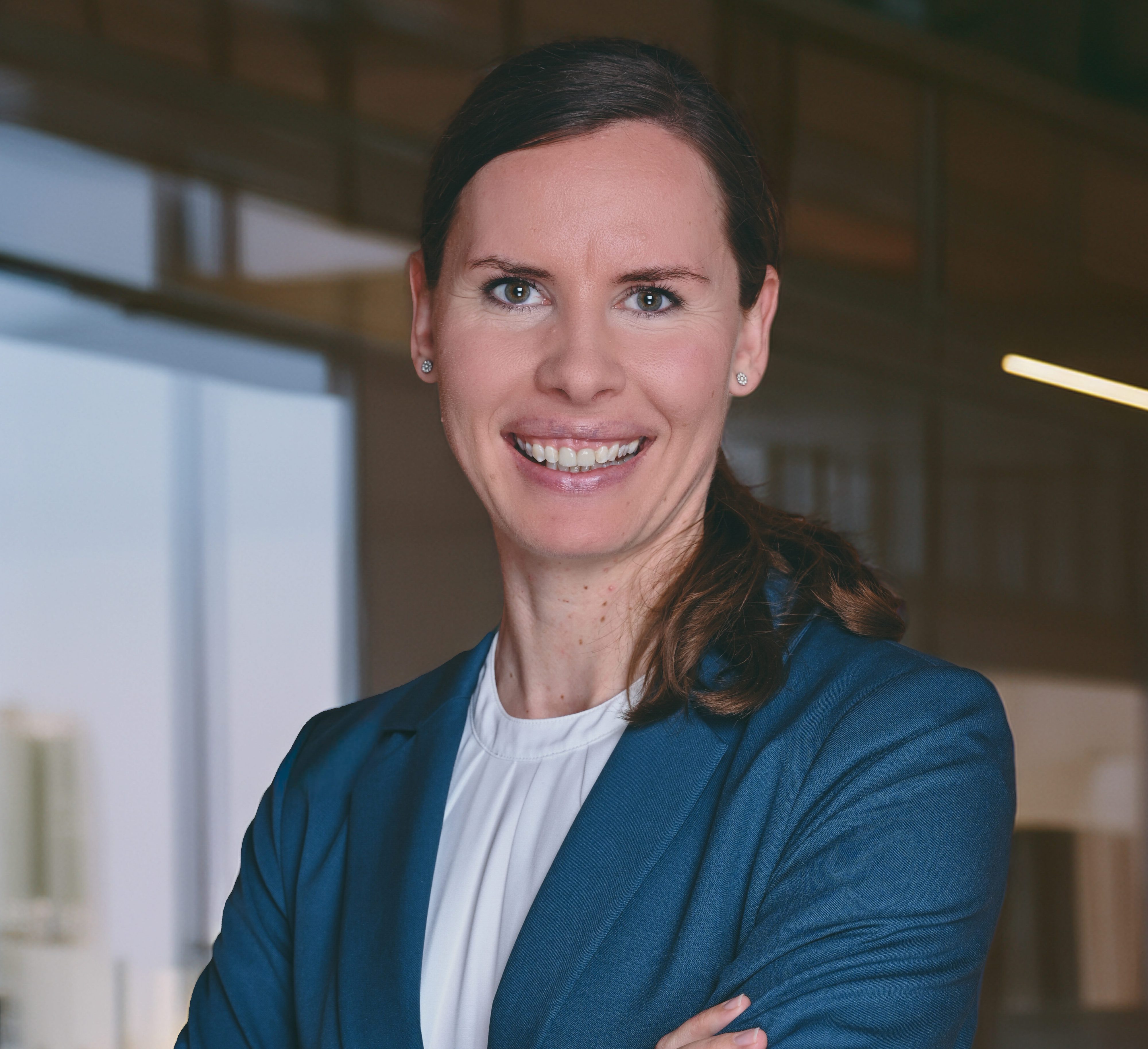
In a nutshell: In our interview series for Women's Day, we introduce women from the logistics industry. Maj-Britt Pohlmann, Head of Operational Transformation at Aurubis and Executive Coach on the side, speaks candidly about invisible barriers, the business case for diversity, courageous men who open doors, and women who are allowed to learn to claim their place with confidence. She explains why technology alone cannot solve logistics' image problem – and why leadership is the decisive lever.
From the Port of Hamburg to Transformation
"I'm from Hamburg and I always loved the port," says Maj-Britt with a laugh. "The container cranes, the ships – they fascinated me."
What sounds like a romantic childhood memory became the starting point of a career in logistics. Through Hamburger Hafen und Logistik AG, she found her way into the industry and went on to hold leadership positions at various companies along the logistics value chain. Today, as Head of Operational Transformation at the international multi-metal company Aurubis, she oversees comprehensive change processes and works alongside as an Executive Coach in the transport and logistics sector.
"I've seen logistics from every angle," she says. "And I find it incredibly exciting how much you can actually move."
Moving things forward is an apt description. For 20 years, Maj-Britt has been working on process optimization, Operational Excellence and transformation. She has implemented systems, restructured workflows and guided organizations through change processes. Yet despite her affinity for technology, one thing is clear to her: the decisive lever is not technology – it's people.
She describes her work as an impact triangle of process, technology and people. "The triangle has to work together, otherwise it doesn't function," she says. Processes and technology can be implemented. Whether change actually takes effect is decided by the team. At the center of this triangle stands the leader – connecting the elements and ensuring that change is not merely implemented, but understood and internalized.
That is precisely why diversity is not a side topic for Maj-Britt. Anyone who wants to shape transformation needs different perspectives at the table. And that inevitably raises the question of what role women will play in logistics going forward – and why their viewpoints are indispensable for sustainable change.

Equal Competence, Higher Barriers
Logistics has always been – and still is – a male-dominated field. Maj-Britt experienced this early on.
"From my perspective, women still often have to prove themselves one more time," she says. "Their potential is frequently not recognized right away. Women have to deliver results, again and again." And yet, this is rarely a matter of deliberate discrimination. "It's more of a habit. Something that has grown historically."
She recalls her first congress of the Bundesvereinigung Logistik. "In a huge room full of black suits, there were maybe a handful of women." What was missing at the time were role models. "Female leadership perspectives. People who show how logistics can be reimagined."
In male-dominated settings in particular, she observes, different perspectives don't always find an immediate audience. "If you have a different viewpoint, if you argue differently, your points sometimes have to be made more than once before they register in the discussion." Quieter voices are often most affected. "You need people who open doors for other perspectives. Especially for the quieter voices."
Allies, Quotas and Structural Barriers
For Maj-Britt, so-called male allies are a key success factor on the path to greater balance in leadership positions. "It comes down to who speaks a woman's name at the decisive moment." What is needed are sponsors who actively advocate, and leaders who take responsibility. Because structural barriers do exist, Maj-Britt emphasizes.
At the same time, she observes positive developments: more women are graduating from universities, the picture at trade fairs and conferences is becoming more diverse, startups are being founded by women and mixed teams, and the middle management tier is becoming more female. But to keep this progress from stalling, concrete measures are needed.
On the question of gender quotas, Maj-Britt takes a clear stance: "In my view, quotas are necessary to truly achieve results." Her goal is unambiguous: "Fifty fifty. It's not about putting one woman at the table. It's about genuine diversity."
Three Concrete Impulses for Leaders
When structural change is genuinely desired, its success is determined in the day-to-day reality of leadership. Diversity does not emerge from mission statements alone, but through concrete decisions, conversations and deliberate priorities. For Maj-Britt, equality therefore begins not on values posters, but in team meetings, feedback conversations and staffing rounds.
From her own leadership practice, she derives three concrete impulses that can be put into action immediately.
#1 Listen properly.
"Talk to each individual and truly
Did you find this article helpful?

How to Plan an AutoStore System – Answers from the even Webinar with AutoStore
From the first key figures to the finished grid design: How requirements become a warehouse system.
Dungarees, Safety Boots, Forklifts
Why logistics needs to shed its dusty image – an interview with Stefanie Schlichting.

Why AutoStore guides visitors through LogiMAT
Cathrin Hunter (AutoStore) on better orientation at trade fairs and the partner tour at LogiMAT.

How Do You Put Logistics on Paper?
On the background of a 150-page specialist report and how logistics can be told as a story.