


6 Tips on How a 3PL Vendor Becomes a True E-Commerce Partner
An interview with Stephan Kettemann and Jose Jr. Lee.

In a nutshell: Drawing on a real partnership between Glorious Gaming and logistics service provider STACI, this article delivers six practical tips for successful collaboration. Essential reading for anyone navigating the complex field of fulfillment and service partnerships.

In the fast-moving world of e-commerce, few things are less forgivable than logistics problems. Customers expect instant deliveries, seamless returns and perfect packaging – regardless of how complex the processes behind them are. To meet these demands, many online retailers rely on third-party logistics vendors (3PL). Yet outsourcing warehousing and shipping does not simply initiate an operational process – it marks the beginning of a partnership that puts trust, communication and flexibility to the test.
This became clear in a conversation with Stephan Kettemann, CEO of STACI Deutschland, and Jose Jr. Lee, Senior Manager Global Logistics & Warehousing at Glorious Gaming, a US company specializing in customizable mechanical gaming keyboards. For two years, both teams have been working together to build Glorious's European logistics network – a project that started small but quickly grew in complexity.
Behind a smooth timeline, however, lies a real story of co-creation, challenges and the subtle difference between a service provider and a true partner.
Start with ambition, not certainty
"Two years ago, we had absolutely no physical presence in Europe," says Jose. "We shipped everything from Asia or the US. But if you want to grow in this market, you can't keep doing that indefinitely."
Germany quickly emerged as the logical hub: centrally located, experienced in fulfillment and culturally aligned with European customer expectations. The only question was: who could help build it?
"We first had conversations with STACI UK," Jose continues. "Then came the contact with Germany. They immediately understood what we needed."
"Initially, the volumes were small," confirms Stephan. "But we saw the potential – and more importantly, the willingness to grow together."
Workshops that were more than sales pitches
The early phase was defined by intensive workshops – technically demanding, but decisive.
"These weren't just kick-off meetings," says Stephan. "We met regularly to integrate the IT systems cleanly. When it comes to ERP and WMS connectivity, there's no room for pretense."
"That's exactly where the trust was built," Jose adds. "We were honest from the very beginning – including about what we didn't yet know."
The collaboration was productive but demanding. "Two teams, different time zones, a new product portfolio – there were technical hurdles and tight schedules," says Stephan. "That's when you find out whether you're working with a partner or merely a contractor."
It's not about culture – it's about listening
One team based in Germany, the other spread across the globe – a recipe for cultural misunderstandings, one might think. Yet both sides dismiss that notion.
"A culture workshop wasn't necessary," says Stephan. "Our account managers work internationally and everyone speaks the same operational language."
Jose agrees: "If you see cultural differences as an obstacle, you've already failed. The real challenge is staying open – even when things get uncomfortable."
Reality: Weekly alignment calls
To this day, both teams meet weekly – a ritual that is far more than routine.
"Sure, we talk about KPIs," explains Stephan. "Inventory accuracy, shipping times, delivery performance. But the real issues live in the grey areas that never show up in spreadsheets."
One example was a complex shipping issue to the UK. "That cost us weeks," says Jose. "But what matters is this: STACI didn't look the other way. They got their UK team involved, rolled up their sleeves and resolved it."
"It was exhausting," Jose continues. "But no one gave up. That's exactly what sets partners apart from vendors."
B2B logistics: Where things get really challenging
While B2C tends to follow a more standardized flow, B2B is a different game entirely.
"Customers like Amazon or MediaMarkt have routing guides running to 100 pages," explains Jose. "If a single detail is off – pallet configuration, delivery timing – you're facing penalty charges."
"That's why we have to work through every customer together," says Stephan. "There's no universal solution. We sit down, read through the documents and translate them into processes."
As expansion continues, the goal is to further standardize B2B processes. "That's the only way to maintain quality as volumes increase," says Stephan.

Did you find this article helpful?
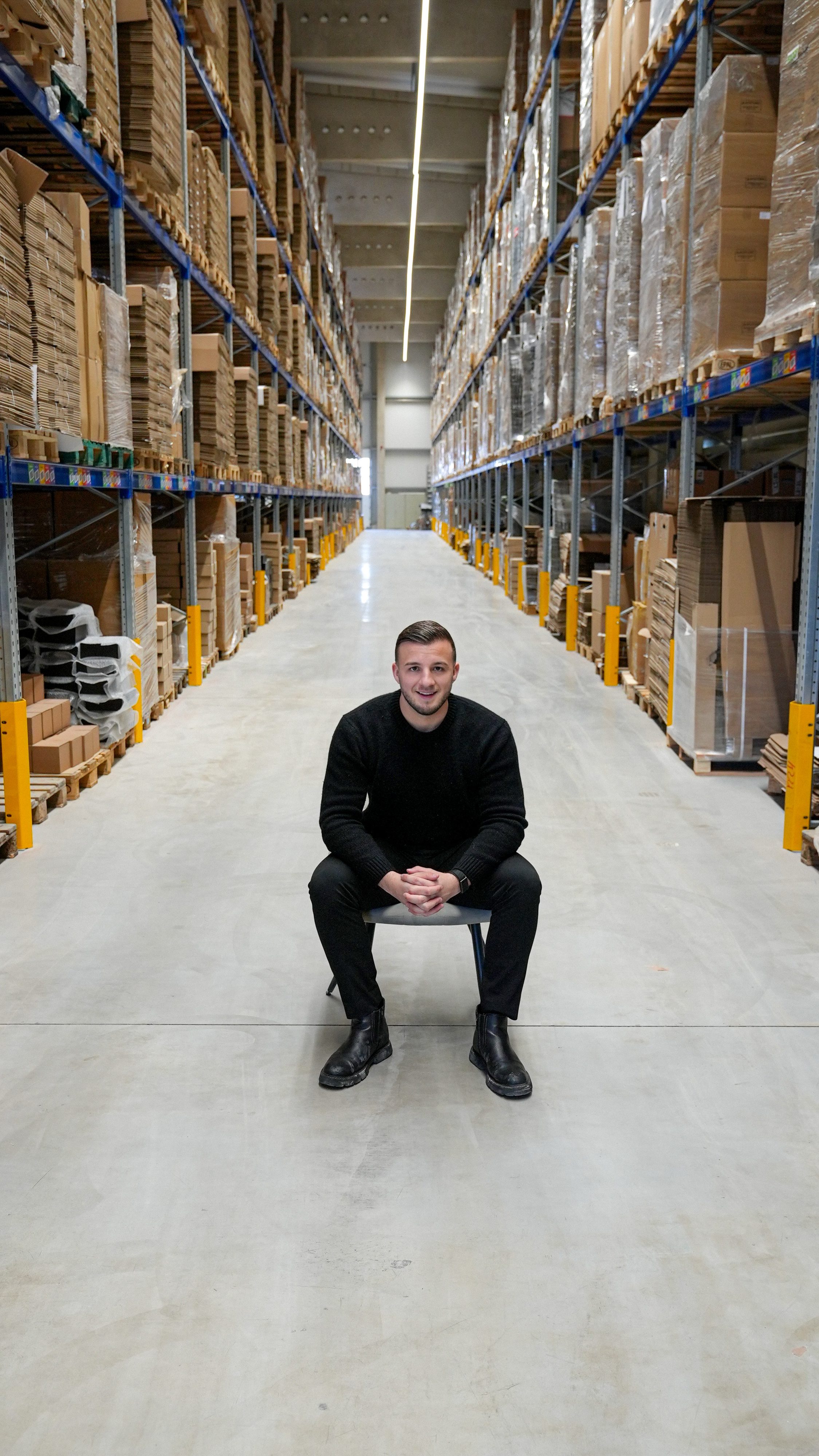
"I'm building Germany's largest logistics empire"
How a young founder is rethinking logistics - with Leon Michel, CEO of fly fulfillment GmbH.
Die besten Fulfillment-Dienstleister für E-Commerce 2025 / 2026
Welche Fulfillment-Dienstleister überzeugen wirklich im E-Commerce? Unser Vergleich 2025/2026 basiert auf echten Nutzerbewertungen.

From Excel Chaos to Scalable Fulfillment – Answers from the even Webinar with storelogix & Cella
Covering the most interesting questions on configuration, updates, and go-live speed.

The Top-Rated Solutions 2026: Fulfillment, AutoStore System Integration and SAP Consulting
About three solutions that were recognized in 2026 on even logistics as top-rated solutions based on real user reviews.