


Developing Skilled Workers – Secure Up to 100% Funding
How DACHSER and WBS TRAINING benefit from the German Qualification Opportunities Act.
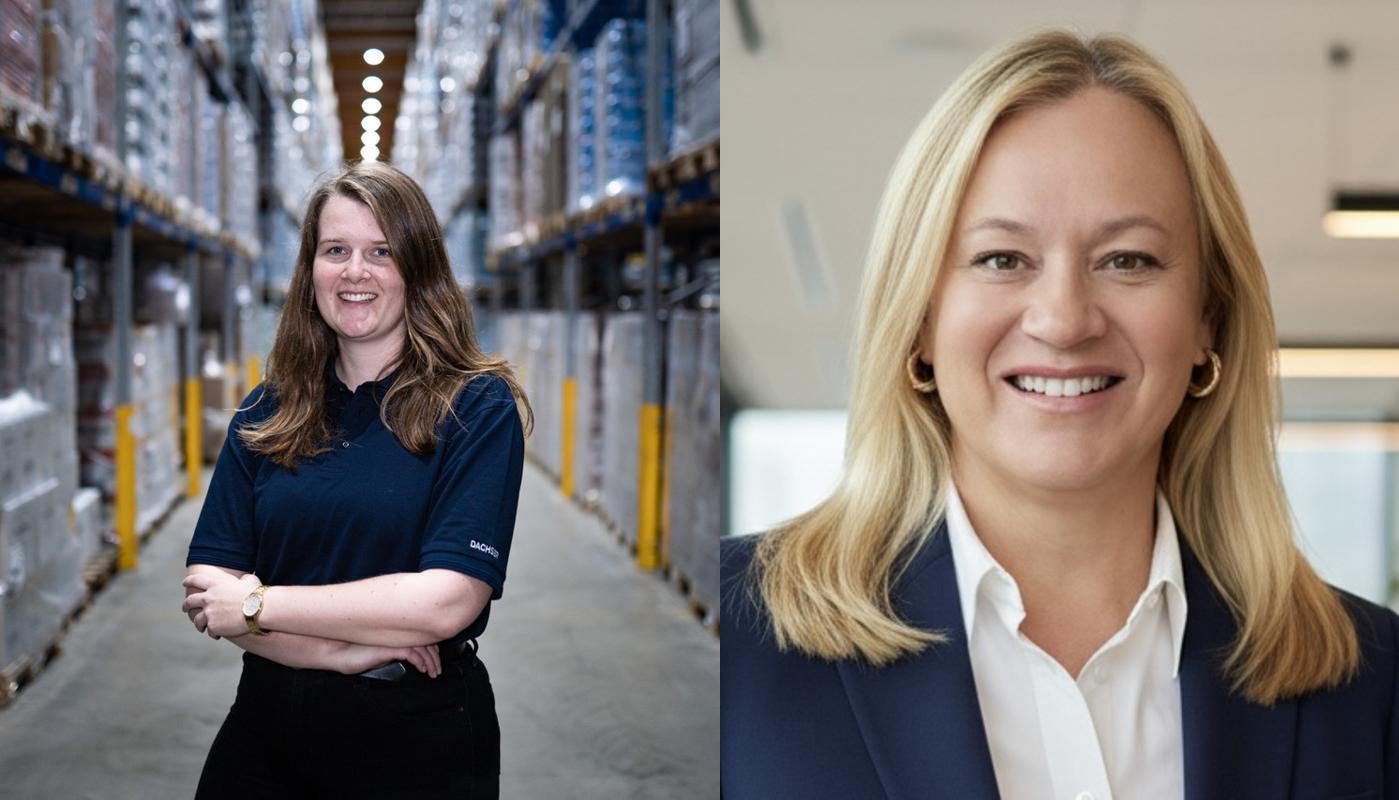
In a nutshell: Skilled labor shortages, transformation, cost pressure. But while others lament a lack of staff, DACHSER has taken action. Together with WBS TRAINING, the company is leveraging the Qualification Opportunities Act to systematically upskill warehouse employees and offer career prospects to career changers.
The key advantage: the federal government funds training costs and salaries at up to 100 percent.
Read on to find out how the project came about and what tips the two project leads have to share.
From Skilled Labor Shortage to a Qualification Initiative
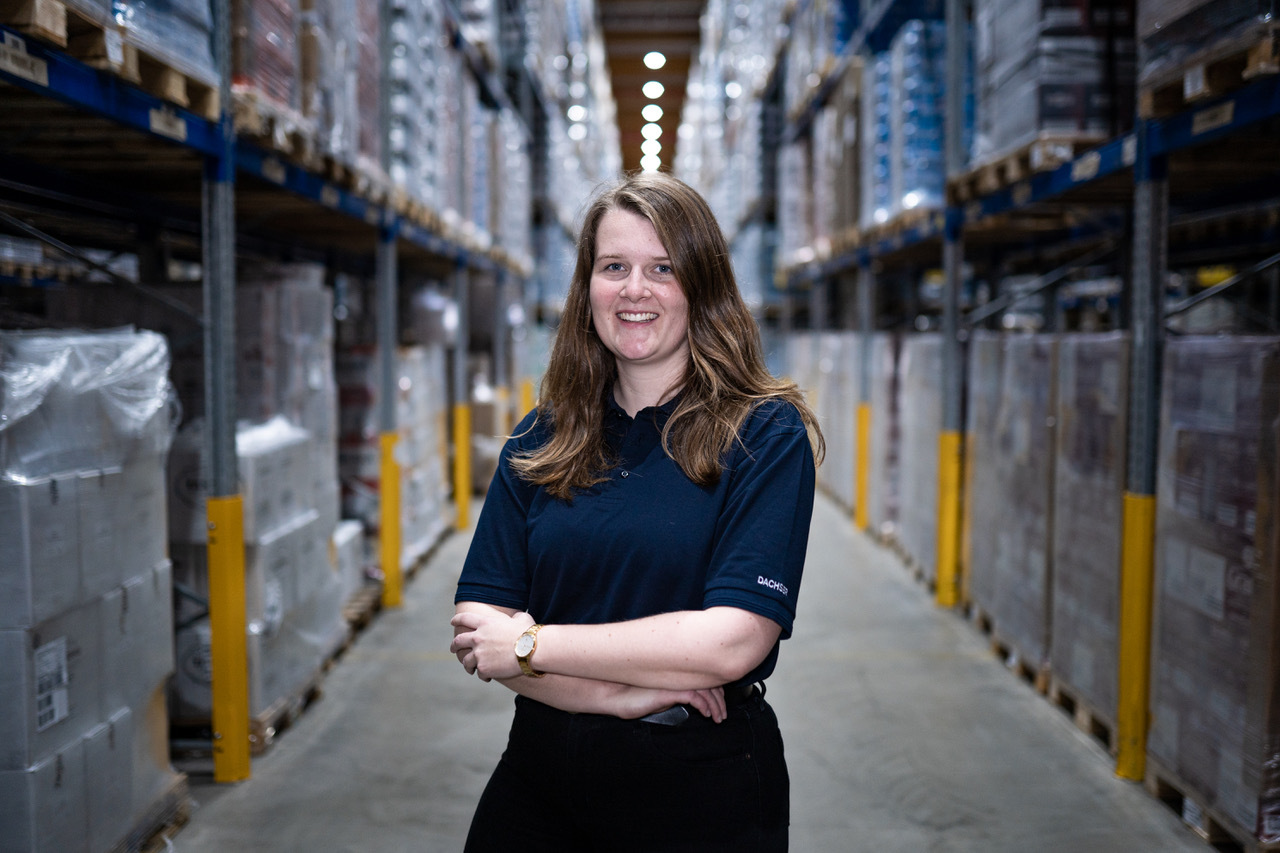
"The skilled labor shortage is something everyone is familiar with by now," says Carolin zum Felde, Consultant in Recruiting and Onboarding at DACHSER. "Even in the blue-collar sector, it's becoming increasingly difficult to fill all positions. We simply had to find new approaches."
This is exactly where the Qualification Opportunities Act came into play – a funding instrument provided by the Federal Employment Agency that supports companies in upskilling their workforce.
DACHSER decided to set up a project together with WBS TRAINING specifically aimed at developing warehouse employees and career changers.
"Our idea was to give people without a warehouse logistics background the skills they need through partial qualifications," explains Carolin. "And at the same time, to give our existing colleagues the opportunity to further their professional development."
For WBS TRAINING, the request was right in their area of expertise, says Sabine Dirnberger, who works as a consultant for the Qualification Opportunities Act:
"We help companies make use of funding to build a skilled workforce. The DACHSER project immediately showed that everyone was pulling in the same direction – from HR to managers and the Federal Employment Agency."

Qualification Opportunities Act Consultant at WBS GRUPPE
Partial Qualifications: Learning in Stages
The project is based on the concept of partial qualifications (PQ). Instead of completing a full apprenticeship, participants work through individual learning modules that can later be combined into a Chamber of Commerce (IHK) qualification.
Sabine explains:
"The standard apprenticeship occupation – such as warehouse specialist or logistics specialist – is broken down into several modules. After each partial qualification, there is an IHK examination. Anyone who successfully completes all modules can then sit the final external examination."
The format is particularly attractive for career changers and long-serving general workers. Carolin describes it this way:
"Some of our employees have been working in the warehouse for years but never completed a formal qualification. For them, this is a gentle introduction to the theoretical side – and at the same time the first step toward a professional certification."
The framework has also been tailored to suit DACHSER's needs: the theory phase takes place online in the virtual classroom LearnSpace 3D, while the practical phase is conducted directly in DACHSER's warehouse. This means what is learned can be applied immediately.
"During the theory phase, participants study online for eight hours a day. After that, the practical phase begins. It's like a compact, condensed apprenticeship – but flexible and eligible for funding," explains Sabine.
Learning Digitally, Growing in Reality
In 2024, the first cohort launched: nine participants spread across various locations throughout Germany – with a 100 percent pass rate in the IHK examination.
"That was proof for us that the concept works," says Carolin. "Four of them immediately signed up for the next PQ module."
The combination of digital instruction and on-site practical training was well received.
"For the first time, we were able to form a nationwide learning group. Each branch could enroll one or two people. That simply wasn't possible before," Carolin emphasizes.
Sabine adds: "Our virtual classroom brings together learners from Hamburg, Munich, or Dresden in one shared space. This learning culture is new for many – but it inspires them. And it works."
Bureaucracy Meets Enthusiasm
Of course, the journey was not without its hurdles. "Bureaucracy is a fair description," laughs Carolin.
"Before we could start, we had to apply for training vouchers for all participants – and with the local employment agencies at that. Unfortunately, the process works slightly differently in each federal state. That kept us very busy at times."
Sabine nods: "We held countless coordination meetings – with the Federal Employment Agency, with DACHSER, with regional associations. But it was worth it."
For both parties, a key factor was ensuring that all stakeholders were involved in communication early on. "The interplay between the training provider, the Federal Employment Agency, and the company was the key to success," says Sabine.
Professional Development as Part of Company Culture
At DACHSER, professional development is far from a peripheral issue.
"We see qualification as part of our culture," Carolin emphasizes. "Logistics is People Business – that's not just a slogan, it's a guiding principle."
The partial qualification program is therefore deliberately not viewed as a pure recruiting tool, but rather as a long-term development opportunity.
"We have individual conversations with each person. Some simply want to feel more confident in their role; others have their sights set on a leadership position in the medium term. We create the framework that makes that possible," explains Carolin.
And for career changers, the project is also a door-opener:
"Anyone who joins us first signs an employment contract, gets to know the team, works alongside colleagues – and can then enter the qualification program. That way, you grow into the role step by step."

Did you find this article helpful?
Sustainability and Logistics – A (Beginner's) Practical Guide to Circular Economy for Logistics
The future of logistics is no longer a straight path — it's a circle. This practical guide helps you take your first steps into the loop.

Black Friday and Its Impact on the Logistics Industry
Shopping ecstasy for some, logistical challenge for others.
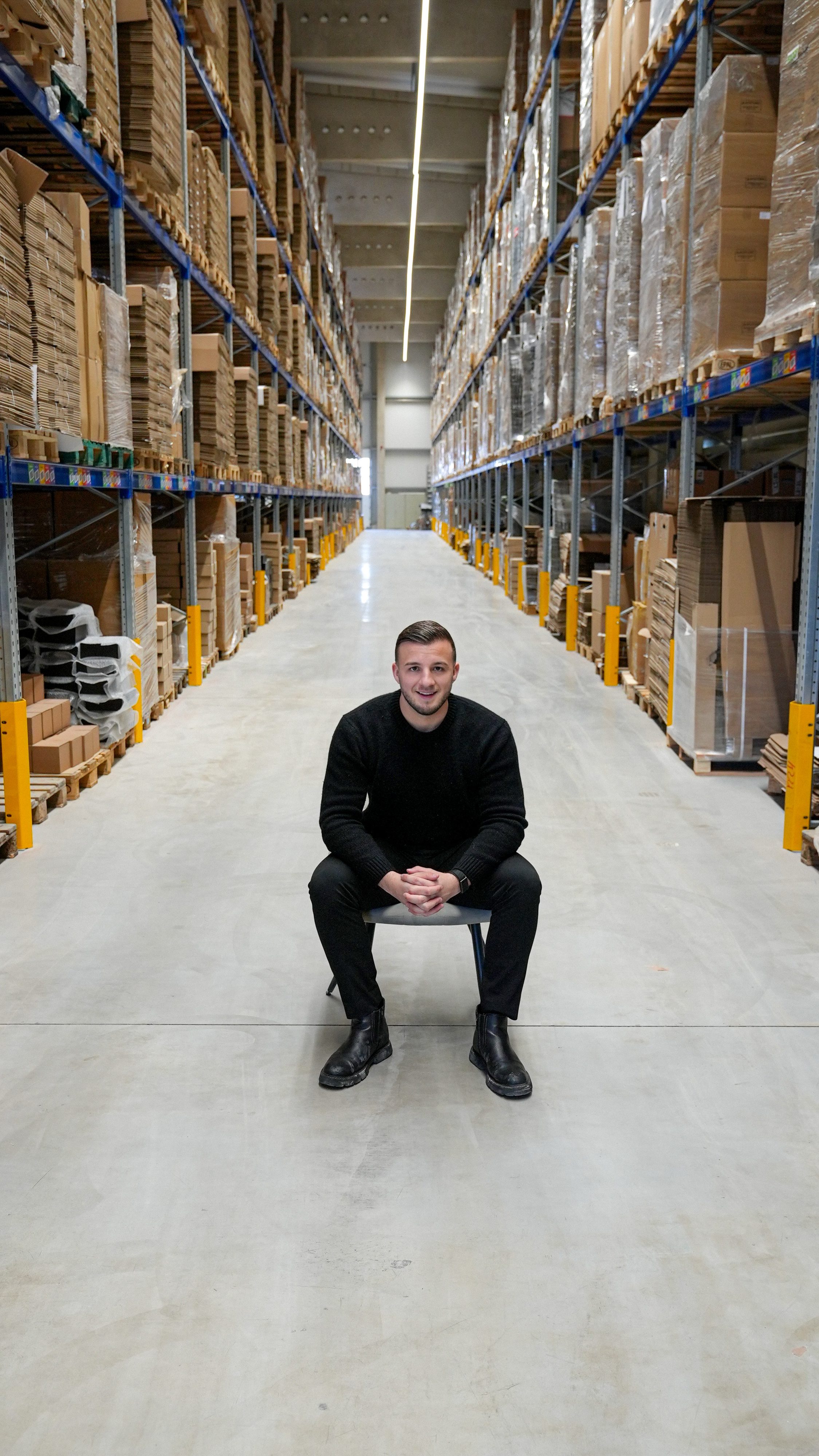
"I'm building Germany's largest logistics empire"
How a young founder is rethinking logistics - with Leon Michel, CEO of fly fulfillment GmbH.
Die besten Fulfillment-Dienstleister für E-Commerce 2025 / 2026
Welche Fulfillment-Dienstleister überzeugen wirklich im E-Commerce? Unser Vergleich 2025/2026 basiert auf echten Nutzerbewertungen.