


Sustainability and Logistics – A (Beginner's) Practical Guide to Circular Economy for Logistics
The future of logistics is no longer a straight path — it's a circle. This practical guide helps you take your first steps into the loop.
In a nutshell: My previous blog posts on this topic had something of Lexi about them — the lovable bookworm and librarian from Hallo Spencer. A friendly, fuzzy guide through the jungle of half-knowledge, so to speak. Lots of explaining, lots of categorising, lots of differentiating. Sometimes I catch myself thinking: OK, that's enough. I don't always want to explain. I want to do more! And I can hear your imaginary voices calling for more practical content too. Or rather: I'm imagining them. Though that may also just be a lovely indicator of my mental state. Surely it must be possible to take a somewhat more pragmatic approach? Understanding on the one hand, and pragmatism on the other — not as opposites, but as a dynamic duo. For logistics professionals. So I grabbed my seat cushion, brewed a mate tea in my calabash-bombilla combo, sat down at my Bureau Mazarin, and started typing. What came out is a kind of practical guide. Questions that logistics professionals should ask themselves at the start. Still high-level, but perfectly usable as a starting point and anchor. At least, that's what I hope. If you want to go deeper, feel free to get in touch.
Why act now?
Circular Economy is more than a sustainability topic for logistics. It is becoming a competitive factor, as customers, legislators and investors increasingly demand transparency, CO₂ reduction and resilient supply chains. Those who offer circular services and technologies early on position themselves as strategic partners rather than mere service providers or suppliers.
Across various blog posts, I have already examined the Circular Economy from different angles. For anyone who wants to brush up on the background, I recommend my previous blog entries:
- The Circular Economy
- Logistics as the Engine of the Circular Economy?!
- The Circular Economy and Reverse Logistics
- The Circular Economy and Resilience Part 1 and Part 2
Since the Circular Economy brings different roles, levers and implementation options for the various players in logistics, this practical guide is structured accordingly. For clarity, I have organised the recommendations into two central areas of logistics:
- Recommendations for logistics companies
- Recommendations for vendors of logistics and automation technologies

Part A: Recommendations for Logistics Companies
( Freight forwarders, 3PL, contract logistics, fulfillment, CEP services)
Target vision: From logistics service provider to orchestrator of circular goods flows
In the Circular Economy, the role of logistics companies expands fundamentally. Rather than handling exclusively linear transport and warehousing processes, logistics service providers take on a central function in organising and managing circular material flows. This includes returns, sorting, forwarding for reuse or reprocessing, and providing transparency across the entire product lifecycle. This transformation opens up new business opportunities, strengthens customer loyalty, and at the same time increases resilience against supply chain disruptions and resource shortages.
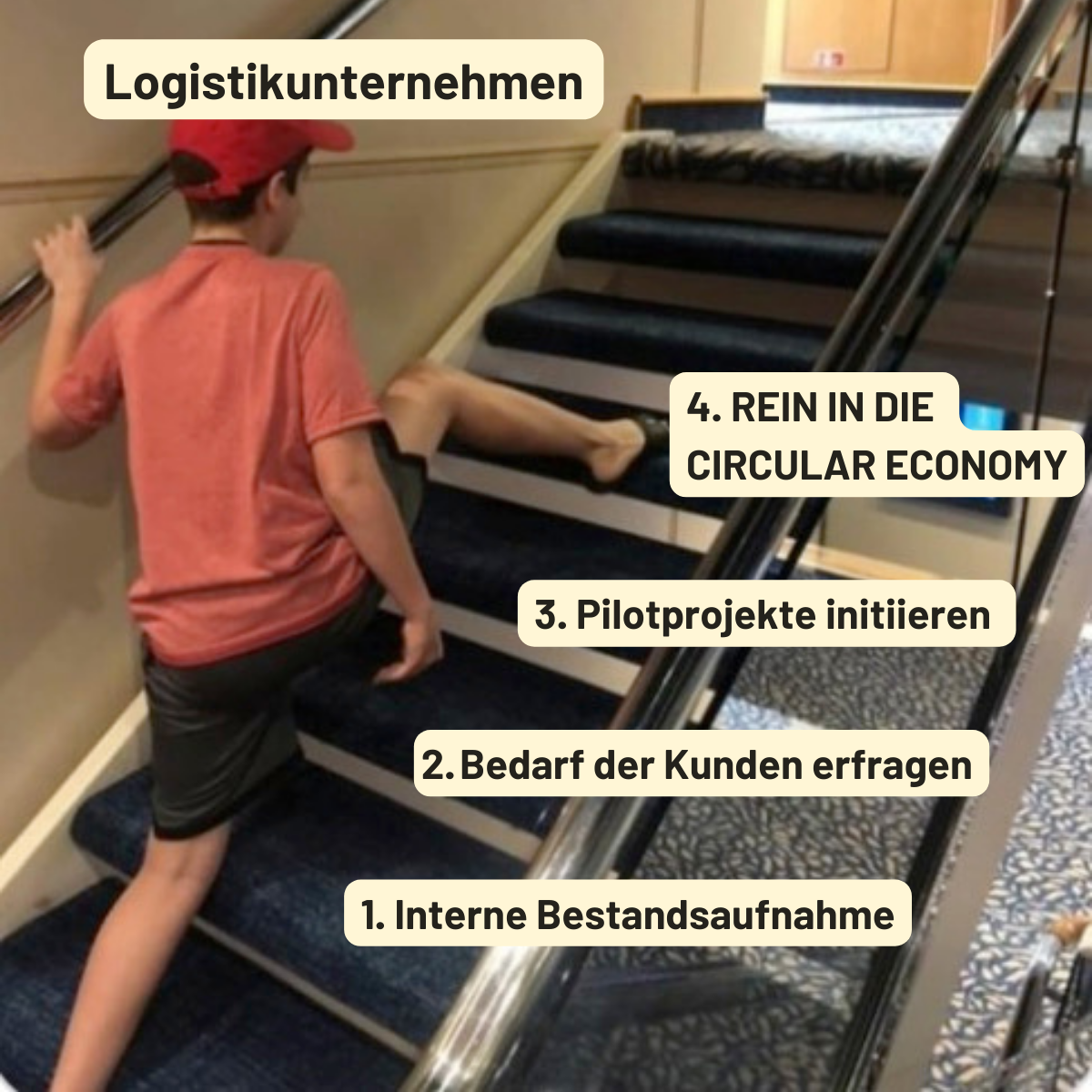
Initial steps: Getting started with Circular Economy
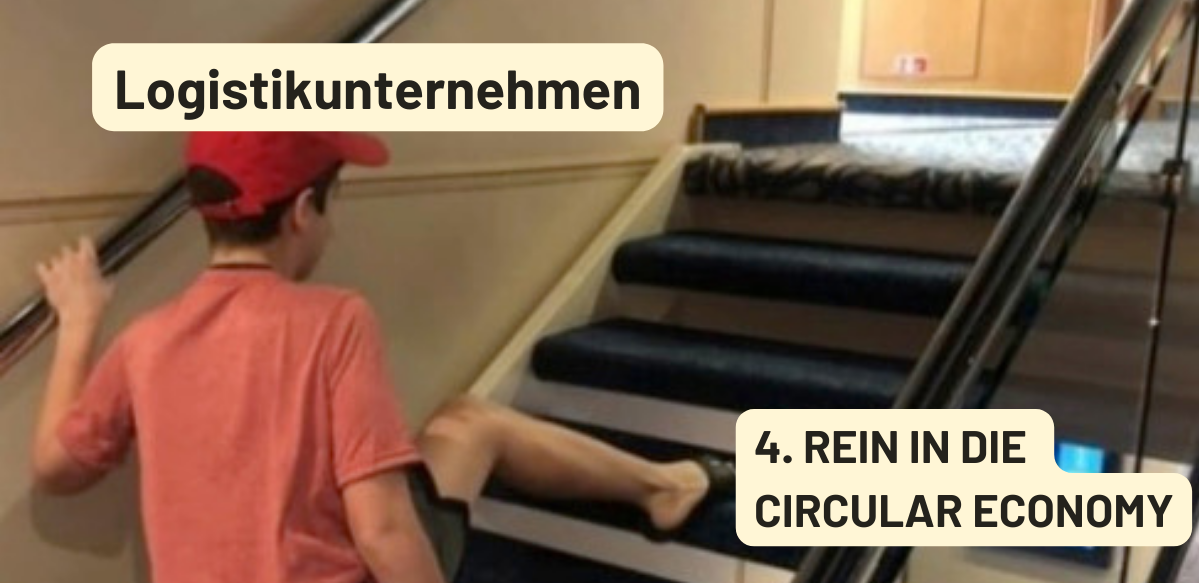
#1 Conduct a circularity readiness check of your own logistics processes
The first step is to create transparency around existing material and goods flows. The goal is to identify starting points for circular solutions. The following questions in particular should be considered:
- Where do return flows arise — for example through returns or reusable packaging?
- What packaging materials are being used and disposed of?
- Where do empty runs or inefficient transport movements occur?
- Which existing processes could be leveraged for return logistics?
This analysis forms the basis for developing concrete measures.
#2 Systematically capture customer needs and expectations
Many industrial, retail and e-commerce companies are formulating ambitious sustainability and Circular Economy goals. In practice, however, these often remain at the level of strategic principles — concrete measures and scaled implementation are frequently the exception. Particularly when it comes to Circular Economy, there is still a significant gap between aspiration and reality. [6] Logistics companies can position themselves early as solution partners by actively asking about needs. Key topics in customer conversations include, for example:
- Need for returns or reverse logistics services
- Requirements for CO₂ transparency and reporting (see also below: [7])
- Interest in reusable packaging systems (see also below: [8])
- Support with refurbishment or recycling processes
These conversations help to align new service offerings precisely with market needs.
#3 Pilot projects for reverse logistics

Did you find this article helpful?
Sustainability and Logistics – Circular Economy and Resilience
Blog post 2 of 2: Those who keep things in circles get through crises better than those who constantly hope for resupply.
Developing Skilled Workers – Secure Up to 100% Funding
How DACHSER and WBS TRAINING benefit from the German Qualification Opportunities Act.
Black Friday and Its Impact on the Logistics Industry
Shopping ecstasy for some, logistical challenge for others.
Pay Transparency in Logistics: What's Coming for Fleet and Warehouse Operations
On the new EU directive, its concrete impact on logistics companies, and why waiting is the most expensive option.