


AI in the warehouse: More precise workforce planning
On planability during peaks and the question of why trust often grows more slowly than technology, with Tobias Heyer, Interim CRO at foresAIght.ai.

AI can significantly improve workforce planning in the warehouse: more accurate, more plannable, calmer. Practical experience shows effects of 35–60% more accurate planning* and a reduction of large deviations by up to 50%*. And yet acceptance in many warehouses remains hesitant. Why is that? This article examines opportunities, limitations and the very human reactions to a technology that can change processes, but doesn't automatically create trust.
Too many, too few – rarely just right
Between skilled labor shortages and peak stress, workforce planning in the warehouse is increasingly becoming a critical success factor. Hardly any area is as strongly characterized by fluctuating volumes, short-term decisions and high cost pressure as operational logistics. Tobias Heyer, Interim Chief Revenue Officer at foresAIght.ai, a company that develops AI-supported forecasts for logistics and production environments, also deals with these areas of tension. In his daily work, he operates precisely at the intersection of operational warehouse routines, planning and data-driven decision-making.
Misplanning has a direct impact on several levels simultaneously: on employees, on customers and on the cost structure. A central problem is unevenly distributed workload peaks. "You have known peaks: Easter, Black Friday, Q4 with Christmas," Tobias describes. In between: significantly less volume and thus a constant up and down for deployment planning, temporary work and shift models.
"There are basically three situations in the warehouse," Tobias explains.
- Everyone has enough to do – optimal.
- Too many employees – idle time, frustration, costs.
- Too few employees – stress, backlogs, SLA risks.
It becomes particularly critical with major customers: "If you don't meet SLAs, it costs you cash directly," says Tobias. Contractual penalties are then no longer a theoretical factor. Added to this is the tied-up capital from slow inventory turnover: "Products that sit for half a year tie up cash for half a year."
Gut feeling instead of data: How planning is often done today
Despite this complexity, workforce planning in many warehouses is still based on experience and intuition. "I would say 80% of planning is finger in the air," Tobias claims. "The warehouse manager has 20–30 years of experience and knows: We grow three percent every year and Christmas is more." The problem with this is not experience itself, but the lack of systematic use of data. External factors such as weather, consumer sentiment or marketing campaigns are often not considered at all or only very roughly. "Many forecasts are extremely gut-driven and not very data-driven," Tobias summarizes.
What AI does differently here and why that's relevant
AI-supported forecasting systems start precisely at this point: They analyze large amounts of historical and external data and look for correlations that are hardly systematically detectable by humans. An example from practice: "When the weather is above 20 degrees, demand for ant pesticides increases three weeks later," Tobias explains. "That means: If I see today that it will be warm in three weeks, I have six weeks' lead time." Such correlations can be refined further: "20 degrees plus means five percent more demand, a poor consumer climate might dampen it by two percent." The result: significantly more precise volume forecasts and thus a better basis for workforce planning.
What more accurate planning measurably delivers:
- 35–60% more accurate workforce planning* (among other things through reduction of idle costs and understaffing) - Up to 50% fewer strong deviations* - Fewer overtime hours during peaks - Less idle time during weak phases - More stable shift and deployment planning
The limits of AI
As powerful as AI models are: They are not a crystal ball. "100% accuracy is statistically impossible," says Tobias. Unpredictable events, political decisions or viral campaigns remain risks that cannot be cleanly predicted even with vast amounts of data. There is also another structural problem: missing information. "If marketing is planning an influencer campaign and logistics knows nothing about it, even the best AI won't help." AI can process data, recognize patterns and calculate probabilities. But it cannot invent information that was never shared.
Precisely at this point, the boundary between real value and mere buzzword often blurs in practice. The AI term is used inflationally. "There's a lot of marketing bullshit AI," says Tobias. "They call it AI, but really it's just 'Artificial Interns'." What matters, therefore, is less the label than the question of whether an application actually leads measurably to better planning, fewer deviations and noticeable relief in day-to-day operations.
Does AI make processes better?
"I would slightly disagree with that," says Tobias. "The peaks remain. AI doesn't smooth out volume." The expectation that AI automatically solves all problems is widespread, but deceptive. What AI can deliver is something else: "The probability increases that you can foresee what's coming and thereby plan better." Bad processes remain bad processes. But: better planning creates breathing room. "Leaders have to spend less time on workforce planning and can focus on process improvements," says Tobias. That's a medium-term effect, not an immediate gain.
Acceptance in the warehouse: Between skepticism and relief
Technology always meets people and in the warehouse, the reaction to AI is anything but uniform. The introduction of new systems is perceived not only as technical progress, but above all as an intervention in familiar workflows and certainties. "I've experienced everything," Tobias reports about the introduction of the AI planning tool. "From skepticism to gratitude." At the center of concerns is above all one question: possible job loss. "Many wonder whether their work will become redundant because of this." This is precisely where communication becomes the decisive factor. Transparency and contextualization determine whether fear or trust emerges. "Better planning doesn't mean: 30 people leave. Rather: work changes." In warehouses that are permanently "in the red zone," relief often predominates instead. There, AI is perceived less as a threat and more as relief: "Many there are grateful that structure is being introduced and this permanent working-at-the-limit becomes less."
Understanding creates trust
A central lever for acceptance is transparency. "Information definitely helps," says Tobias about the introduction of the tool. It's not about disclosing every mathematical detail, but showing comprehensible examples. "Explain exemplarily why something is changing. That helps." Important here: Reaching not only decision-makers, but also users. "Buyers and users are often not the same people," says Tobias. "Both need different explanations."
Conclusion: Technology can do a lot, trust takes time
AI-supported workforce planning is not a panacea. It doesn't solve skilled labor shortages and doesn't replace clean processes. But it creates something that could be improved in many warehouses: planability. The actual challenge lies less in the technology than in acceptance. Where communication is transparent, where concerns are taken seriously and where effects are traceable, AI can relieve rather than unsettle. Or, as Tobias puts it in the end: "Stay curious, be open and always ask: What does it concretely deliver?"
*Experienc

Did you find this article helpful?

WMS vs. WCS: Who's in Control of the Automated Warehouse?
About the differences between WMS and WCS, their roles in the automated warehouse, and when which system architecture makes sense.
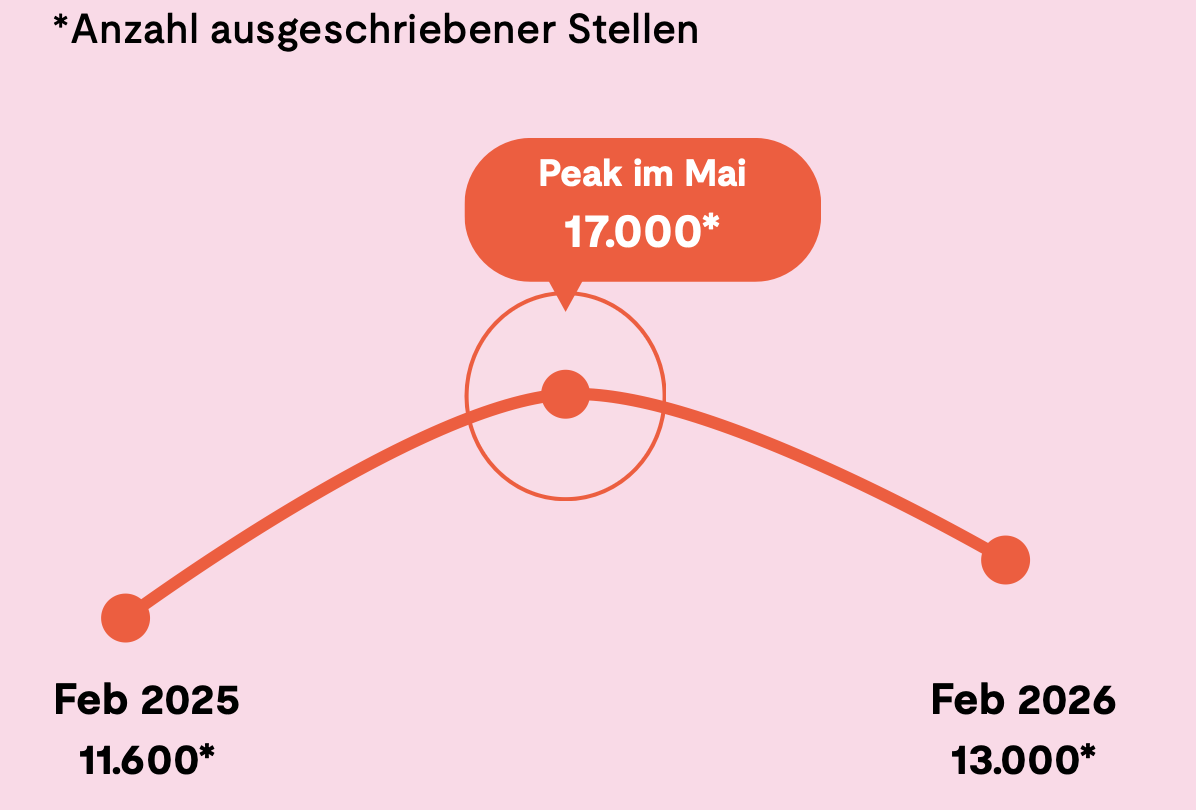
Labour Market 2025/2026 Comparison
Warehouse workers in focus - a data-driven analysis.

Warehouse Control System: The Silent Timekeeper of Automated Material Flows
On the role of the WCS in automated warehouses and why it is critical for stable material flows and efficient processes.

AI in Workforce Planning: Boosting Efficiency, Relieving Teams
How AI is revolutionizing shift planning: less stress, more flexibility, and satisfied employees through smart workforce planning.