


Sustainability and Logistics – CO2 Bullshit Bingo: An Attempt at Clarification
Blog post 1 of 4: Greenhouse gases and the anthropogenic greenhouse effect

In a nutshell: "But the Chinese…" or "Germany is only responsible for 2% of global emissions. And we're supposed to save the world?". Who hasn't heard these arguments? I used to think that we as a society had managed to leave these very one-sided, decontextualised arguments behind us. No such luck. They're back. Fact distortion and "I'll shape the world to suit myself" are experiencing an extremely anti-scientific and therefore anti-democratic renaissance. Discourse becomes impossible when we spend more time debating the existence of facts than discussing their meaning. People have always held different opinions. Today they hold different facts. But without a shared reality, no meaningful collective decisions can be made. With that in mind, I'd like to try to shed some light on the different perspectives surrounding greenhouse gases (above all CO2), the various footprints involved, and our historical and present-day responsibilities – in the hope of providing a little more insight and context.
Note:Given the complexity of the topic, I have decided to split this blog post into four parts:
- Post 1: Greenhouse gases and the greenhouse effect
- Post 2: Climate change, global warming and the CO2 bathtub
- Post 3: CO2 Bullshit Bingo Part 1 (Level: Individual)
- Post 4: CO2 Bullshit Bingo Part 2 (Level: Companies and Nations)
This text feels a little strange to write. It's about climate science. As such, all the facts and most of the descriptions are drawn from the sources listed. I've added or reworded things here and there, of course, but essentially I've just pieced together existing passages of text. So if you think this is a great read: kudos go to the sources.
Greenhouse gases and the greenhouse effect
"Oh God". I hear you. Because I know: boooooring. Not interested in old news. For me, though, this is also the eleventh hour – in more ways than one. When it comes to greenhouse gases in the atmosphere, it's actually already five minutes to midnight. Yet it seems that parts of society have had their memories wiped when it comes to CO2 and its greenhouse companions. So: let's start from the very beginning, as briefly as reasonably possible. Or skip this text, do something wonderful with the people you love, and wait for Part 2.
So: who exactly are these greenhouse gases?
Well, there are 7 of them in total:

A tiny fraction of our Earth's atmosphere – less than 0.1% – consists of greenhouse gases. The most important are water vapour (H2O), carbon dioxide (CO2), methane (CH4) and nitrous oxide (N2O). And right here, certain segments of society, politics and business seize on this very fact to downplay the impact of greenhouse gases. "Such a small proportion can't possibly have such drastic effects. And if we calculate Germany's share of that 0.1% (see above), it comes to 3.1%. So Germany influences 0.0004712% of the CO2 in the air." This fundamentally assumes that a small quantity can only have a small effect. That is completely wrong.
The 4 white dots in the graphic below represent the share of greenhouse gases in the atmosphere.

By the way: If a 5th dot is added, we will have blown the 2-degree target.
The greenhouse effect itself is older than humanity. In fact, we wouldn't even exist without it. How does it work? Greenhouse gases are initially unaffected by direct solar radiation – the wavelength is too short for them to absorb it. So they let it pass through. When solar radiation reaches the Earth, some of it is reflected back, some is absorbed, and some of that absorbed radiation is re-emitted – but in the form of longer-wavelength infrared radiation. And that is precisely the wavelength range that greenhouse gas molecules can absorb. The infrared radiation causes greenhouse gas molecules to vibrate, converting it into heat. Greenhouse gases therefore operate in complete contrast to a Berghain bouncer: everything is allowed in, but not everything is allowed back out. The heat is thus retained in the atmosphere – and initially, that's actually a good thing. Because without this greenhouse effect, average temperatures would be 32°C lower. [2]
Two thirds of the natural greenhouse effect is caused by water vapour (H2O), just under a third by CO2, and a small percentage by other trace gases such as methane. Water vapour is therefore the most important greenhouse gas. This natural greenhouse effect created a moderate, stable climate from the end of the last ice age until around 1880. However: the more ocean and air temperatures rise, the more water vapour enters the atmosphere. This creates a feedback loop that further strongly influences the climate, particularly because water vapour is responsible for clouds and rain. [3] In principle beneficial – since water circulation is equally important – but in the extreme, deeply harmful. More on that later.
Let's focus, however, on anthropogenic greenhouse gas emissions (the non-water-vapour portion) – the greenhouse gases we pump into the atmosphere as a result of human activity. This can also be referred to as the anthropogenic greenhouse effect. Because that is precisely what we can directly influence. Looking at the 4 most important greenhouse gases, emissions were distributed as follows (for the year 2019): [3]
- 64% Carbon dioxide (CO2) from fossil fuels and industry
- The extraction, processing and combustion of fossil fuels such as coal, natural gas and oil releases the largest quantity of the greenhouse gas CO2.
- 11% Carbon dioxide (CO2) from forestry and land use
- The clearing and burning of forests, the draining of peatlands and changes to soil through agriculture also release CO2 into the atmosphere.
- 18% Methane (CH4)
- Methane emissions en

Did you find this article helpful?
Pay Transparency in Logistics: What's Coming for Fleet and Warehouse Operations
On the new EU directive, its concrete impact on logistics companies, and why waiting is the most expensive option.

The Underestimated Climate Problem in the Warehouse
On sustainability in automated small parts warehouses. An interview with Timo Landener on energy, density and CO₂ in intralogistics.
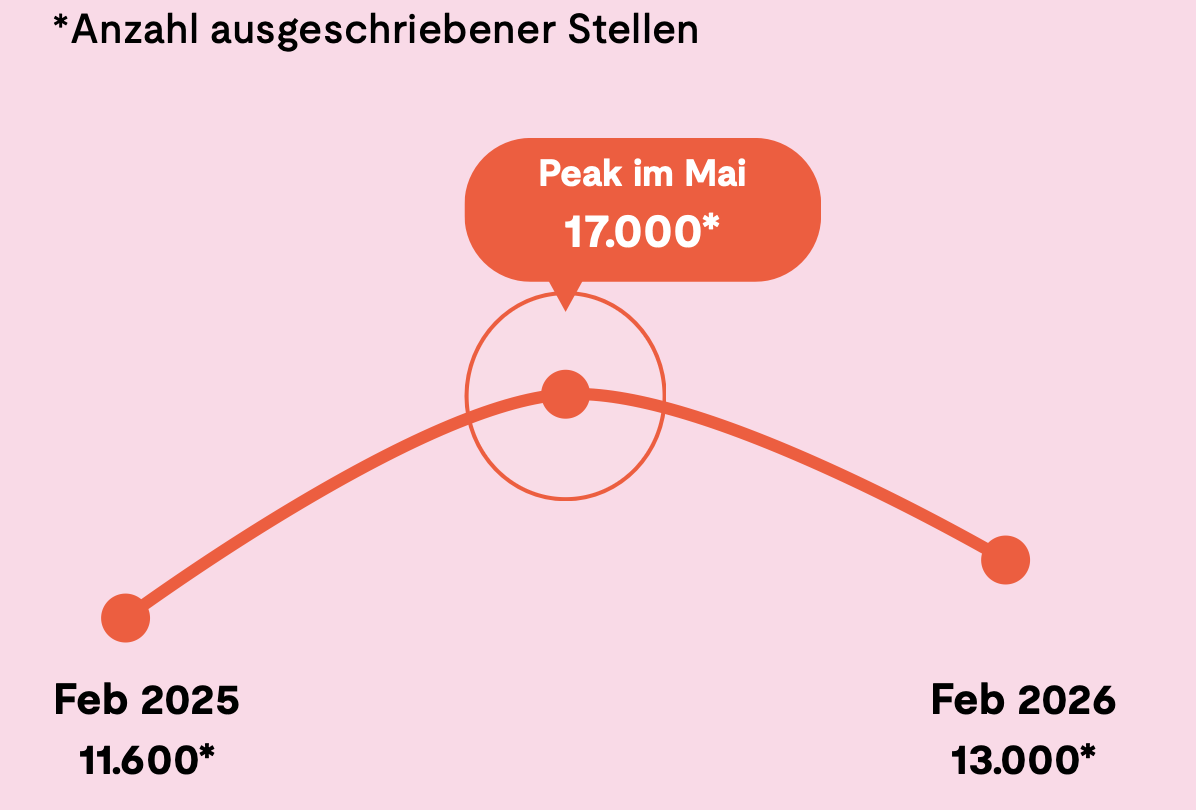
Labour Market 2025/2026 Comparison
Warehouse workers in focus - a data-driven analysis.
Sustainability and Logistics – A (Beginner's) Practical Guide to Circular Economy for Logistics
The future of logistics is no longer a straight path — it's a circle. This practical guide helps you take your first steps into the loop.