


Sustainability and Logistics - The Value of Logistics
What is the societal value of logistics? And why is it important to ask this question?

The industry is under great external pressure to act more economically, socially and environmentally sustainable in the future. And if sustainability is the goal, a lot would have to fundamentally change in logistics. But that's not so easy. In several blog entries, I want to get to the bottom of the status, challenges and possibilities. Today I'd like to start with a simple-sounding but not-so-easy-to-answer question: What is the (societal) value of logistics?
The Alienation from Value Chains – A Globalization Phenomenon
Nowadays, we usually only follow the last two or three causal steps of value and supply chains, which inevitably disconnects us from many things and experiences and leads to a disconnect. Shopping in stores or on digital platforms is the origin for us, the first contact with products. Where goods come from, how they were manufactured, how they were transported – we have increasingly detached ourselves from this in a globalized world. Paradoxically, however, we still associate the value of a product almost exclusively only with its production. We notice this particularly whenever a national key industry falters. After all, it's about jobs. Here too, we have meanwhile become disconnected. Because we often ignore how companies have strategically positioned themselves over the years in a globalized world, sometimes drastically decoupled from the domestic market and labor market. That's how globalization works. We therefore need a holistic engagement with the world as we see it, and an understanding of its interdependencies – everything is connected to everything else, with an accompanying decoupling. It is living in and striving for dynamic equilibrium. To understand how sustainability and logistics can work together for transformation, we must therefore ask ourselves what (societal) value logistics has.
Logistics and Trade as the Foundation of Resilient Prosperity
The question of the societal value of logistics is a difficult question. At least it doesn't really take place in public discourse. Every logistics professional certainly has an answer to it. But let's look at history. According to Jared Diamond – a famous American evolutionary biologist, physiologist and biogeographer – there are 5 reasons why cultures such as the Maya, Easter Island or the Anasazi collapsed in the past and disappeared from the face of the earth (some of which – possibly all – are closely interwoven in some examples of decline):
- (Local) Environmental catastrophes
- (Local) Climate change
- Hostile neighbors
- 1 and 2 with friendly neighbors – too great dependence on trade
- Cultural response to a crisis
Points 3 and 4 are interesting for trade and logistics. In the past, the world was not as interconnected and globalized as today and also less densely populated. Cultures lived for a long time by themselves, sometimes without contact with other peoples. However, when societies had contact with other cultures, their relationship with each other was of crucial importance.
Most societies maintained chronically hostile relations with some of their neighbors. When society was weakened for environmental reasons, for example through prolonged droughts, or for other reasons, it was very likely that the neighbor would exploit the situation. Therefore, it was not uncommon for an entire culture to be killed or annexed in such a phase of weakness.
However, more important for prosperity are relationships with friendly neighbors. Regardless of the actual size of a civilization, an expanding population eventually could no longer feed itself. Sometimes these civilizations were then supported by more distant satellite settlements, which on a small scale is what we know today as globalization. Especially in times of crisis or after a population explosion (and the associated quantitative increase in basic supply), it is important to obtain the resources necessary for survival through trade.
Almost all societies were and are dependent on trade with neighboring and friendly societies, and if one of these friendly societies itself got into environmental problems and collapsed for environmental reasons, then this collapse very likely affected their trading partners as well. In modern times, we have also had to recognize that dependent trade is not resilient and extremely fragile.
Yet trade always also means logistics. Besides the prosperity of a society, trade, including logistics, was and is the insurance of cultures to be able to respond resiliently in times of crisis. Without trade and logistics, a prosperous society would not be possible. Nowadays, all nations of the world share resources and influence each other through globalization, international trade, air travel and the Internet.
We live in a society where the social value of work is normally inversely proportional to its economic value.
The societal relevance and acceptance of logistics as an engine for supply, progress and ultimately prosperity is virtually non-existent. Logistics plays hardly any role in public perception. This is ultimately reflected in the wages of logistics workers, but also in the margins of logistics companies and also in the innovative capacity of the entire industry. At least in comparison to other industries.
We often heard about systemic relevance in connection with professions and industries during the pandemic when it came to nursing staff, cleaning staff, supermarket employees, etc. Absolutely justified. Logistics was only mentioned in passing, for example when supermarket shelves were empty. Or when there was a large-scale shortage of truck drivers in the UK in the wake of Brexit. Logistics cannot therefore be denied a certain systemic relevance.
There is an interesting parallel to the systemically relevant professions identified during the pandemic and logistics or logistics professions: We live in a society where the social value of work is normally inversely proportional to its economic value. In other words: The more a job benefits someone else, the less it is paid. And logistics has this in common with many other professions, like those mentioned above. Following this pattern, one could conclude that logistics has a higher societal value than is attributed to it.
This also applies to remuneration. In people's minds, value creation mistakenly only takes place where things are produced, where something is assembled and created with hands. We completely ignore the transportation of things, even though it is a service of general interest. Logistics is a public service. Our prosperity is based on our ability to move goods (and people) from A to B.
What Are We Actually Transporting?
Of course, the coin has two sides. After all, freight transport makes a significant contribution to the

Did you find this article helpful?
Pay Transparency in Logistics: What's Coming for Fleet and Warehouse Operations
On the new EU directive, its concrete impact on logistics companies, and why waiting is the most expensive option.

The Underestimated Climate Problem in the Warehouse
On sustainability in automated small parts warehouses. An interview with Timo Landener on energy, density and CO₂ in intralogistics.
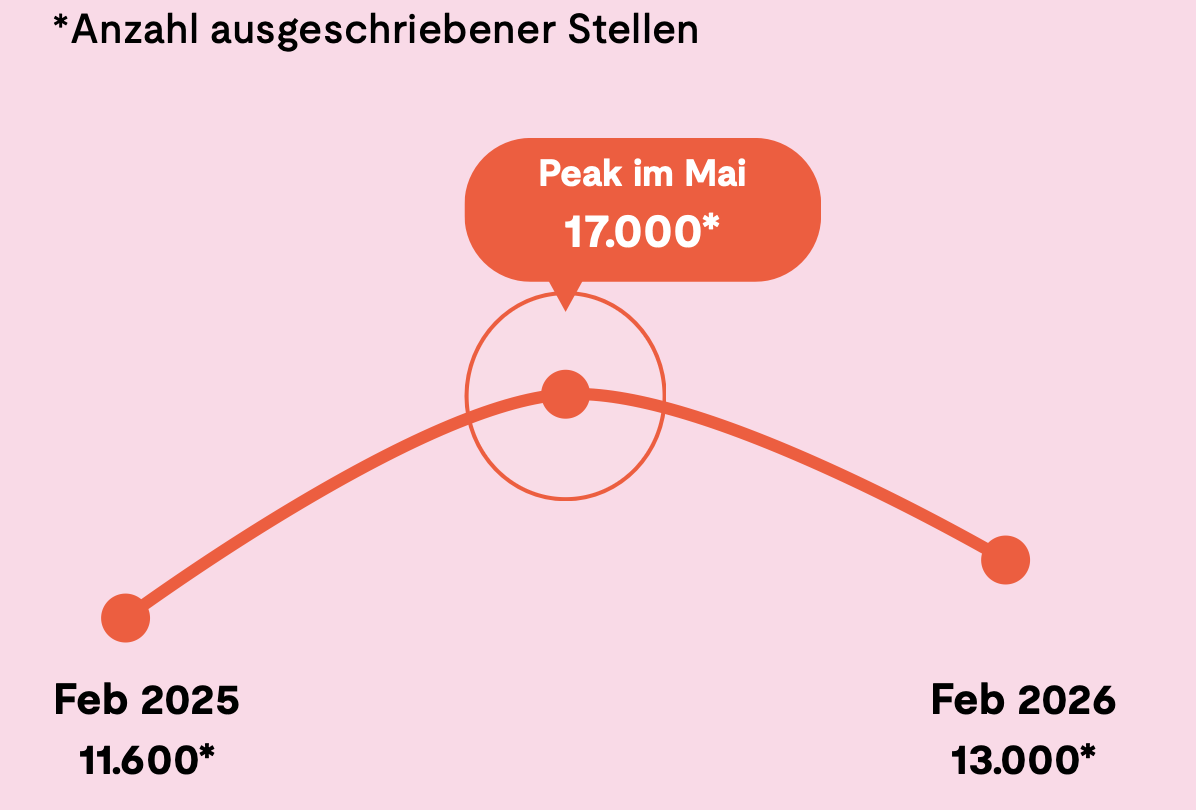
Labour Market 2025/2026 Comparison
Warehouse workers in focus - a data-driven analysis.

Sustainability and Logistics – A (Beginner's) Practical Guide to Circular Economy for Logistics
The future of logistics is no longer a straight path — it's a circle. This practical guide helps you take your first steps into the loop.