


Invisible Despite Co-Founding
Why logistics needs women and yet continues to overlook them – a conversation with Maria Bussmann from majamo fulfillment.
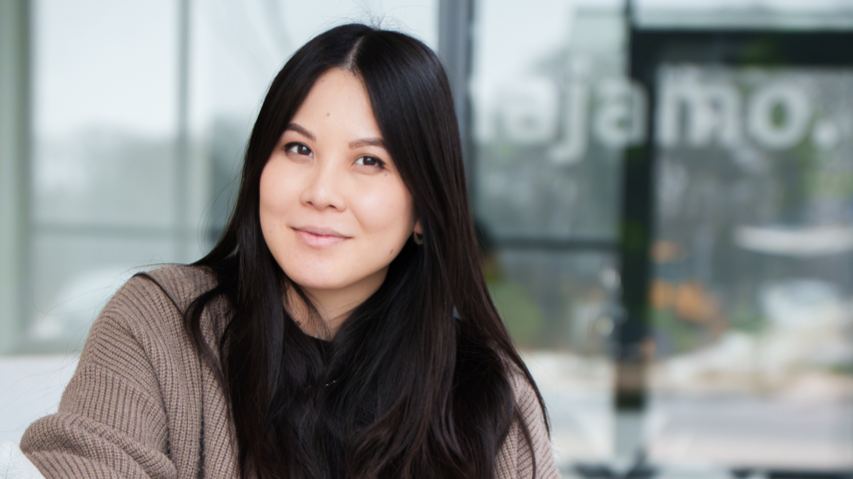
In a nutshell: Two co-founders. One company. One meeting. And yet only one of them is noticed. This is not an isolated incident – it is the structural reality of a male-dominated industry. In this edition of the even logistics Women's Day series, Maria Bussmann, founder and Managing Director of majamo fulfillment, shares what it is like to be a visible woman in logistics while simultaneously being overlooked. The conversation covers power dynamics, gender stereotypes and invisibility, as well as entrepreneurial responsibility, operational excellence and leadership in an industry being transformed by e-commerce and D2C.
A lateral entry – and staying for good
Maria is not a traditional logistics professional. Her entry into logistics did not come through a conventional apprenticeship or career path, but through hands-on entrepreneurial experience. "Honestly, we just kind of fell into it. Back then, we were doing everything ourselves in our online shop."
As logistics became an increasingly decisive success factor in their own fashion start-up, she and her husband Florian deliberately founded a dedicated logistics company in 2019. The operational challenges of e-commerce gave rise to majamo fulfillment, today a fulfillment company serving social commerce brands and D2C models. At majamo, Maria is responsible in particular for the operational build-up, process landscape and the scaling of fulfillment services – from warehouse structures and customer processes through to organisational development.
What started small has grown significantly. Over 12,000 square metres of warehouse space, more than 100 employees, and a second site with around 20,000 square metres and a further 160 employees currently being established.
A modern, growing logistics company. Two co-founders with shared responsibility. And yet this equality is frequently not perceived as such in everyday interactions.
When hierarchies form without a word being spoken
It is a scene that repeats itself. A business meeting. Florian and Maria are both present. And yet a hierarchy immediately takes shape – not through words, but through glances, forms of address and where attention is directed.
"Precisely because Flo and I appear as a duo, you sometimes notice it even more clearly. In some situations, my husband is automatically addressed and I am not approached at all – even though we are both equally involved."

What Maria describes is not a personal misunderstanding. It is a structural pattern. In the logistics industry, power, competence and leadership are still strongly associated with men.
"I would immediately agree that the industry is still very heavily dominated by men. The underlying assumption is that a logistics company must be led and founded by someone male."
This assumption operates subtly and yet with enormous effect. It determines who is trusted with competence, who is listened to, and who is attributed responsibility.
Pigeonholed before you even get started
Breaking into the industry was particularly difficult. Maria recalls: "Getting in is very, very hard. Especially as a female founder. In the beginning, when you have no network and nothing yet to show for yourself, you are quickly put in a box." The assumptions made are rarely explicit, but clearly felt. "Yes, I do believe that people trust me less because I am a woman. That is simply the truth," Maria reflects.
Competence is not automatically recognised. It has to be made visible, defended and actively asserted. And even then, the path is often steeper than it is for male colleagues. For Maria, this meant being especially precise in her expertise, representing decisions with clarity and consciously making her responsibility visible.
Visibility is not an ego trip
To hold your own in this industry, expertise alone is not enough. "I had to push myself to the forefront in conversations. That was sometimes uncomfortable," says Maria.
Visibility here does not mean self-promotion, but self-assertion. Not louder in the sense of aggressive. Not harder in the sense of unapproachable. But more present. She explains: "As soon as you show that you know what you are saying and what you are doing, things improve." Yet this moment often only comes when women actively claim space – space that is not automatically granted to them. "We have to be brave enough to speak up. That starts at the most junior levels. And then we have to step forward. There is no other way."
At the same time, more women who are already visible are needed. "I think it would be wonderful if more women who are already in the industry would raise their profile externally. Otherwise it becomes incredibly difficult to be heard."
Rewriting the industry's narrative
These structures have developed over decades. So has the public image of logistics. The industry suffers not only from a shortage of skilled workers, but also from a serious image problem – particularly among young women.
Did you find this article helpful?
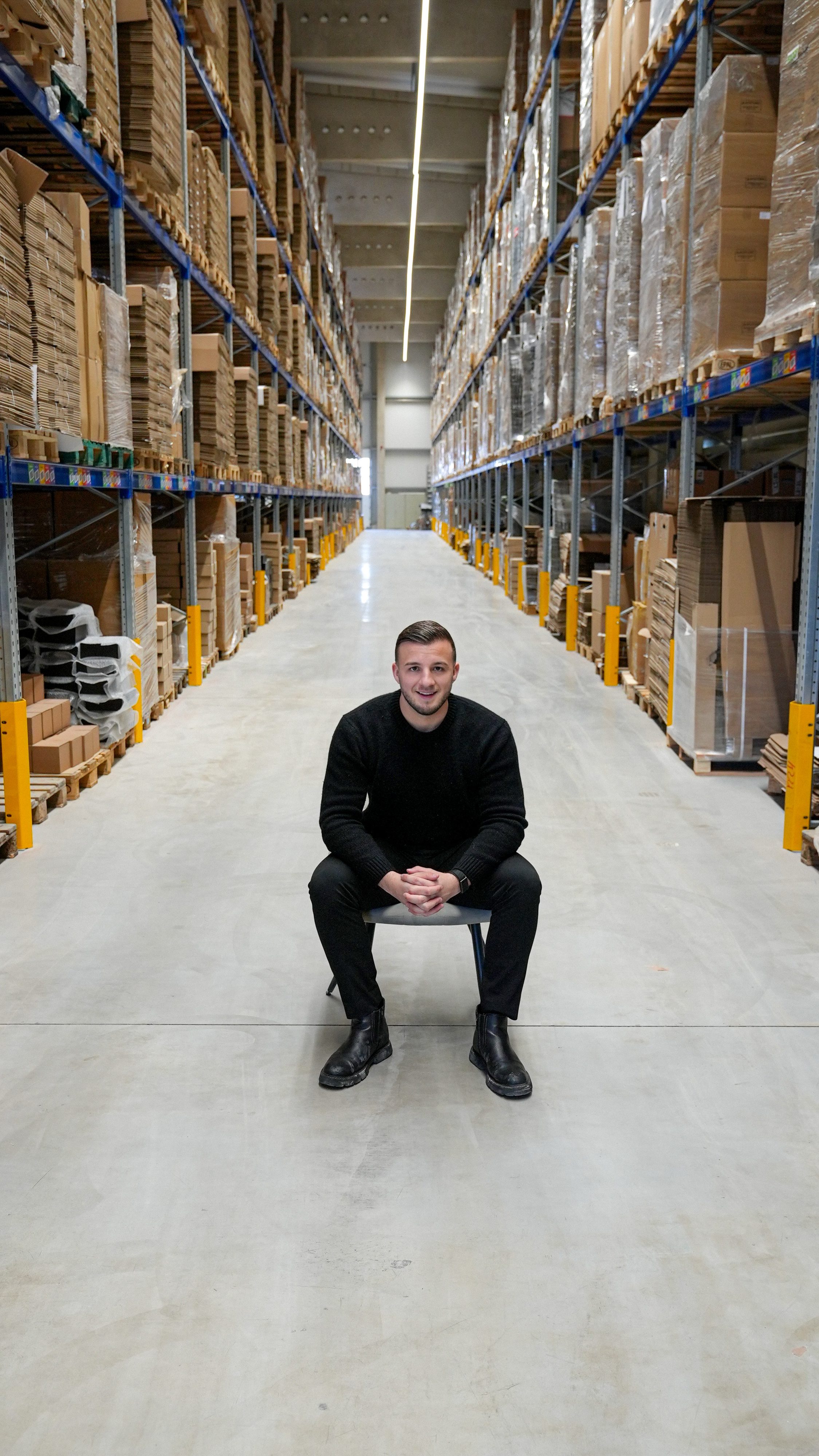
"I'm building Germany's largest logistics empire"
How a young founder is rethinking logistics - with Leon Michel, CEO of fly fulfillment GmbH.

The Top-Rated Solutions 2026: Fulfillment, AutoStore System Integration and SAP Consulting
About three solutions that were recognized in 2026 on even logistics as top-rated solutions based on real user reviews.
Die besten Fulfillment-Dienstleister für E-Commerce 2025 / 2026
Welche Fulfillment-Dienstleister überzeugen wirklich im E-Commerce? Unser Vergleich 2025/2026 basiert auf echten Nutzerbewertungen.

From Excel Chaos to Scalable Fulfillment – Answers from the even Webinar with storelogix & Cella
Covering the most interesting questions on configuration, updates, and go-live speed.