


From 100 Ships to Zero: A System on the Brink
How geopolitics is rewriting the rules of global supply chains — with supply chain and logistics expert Muhammad Shoaib.
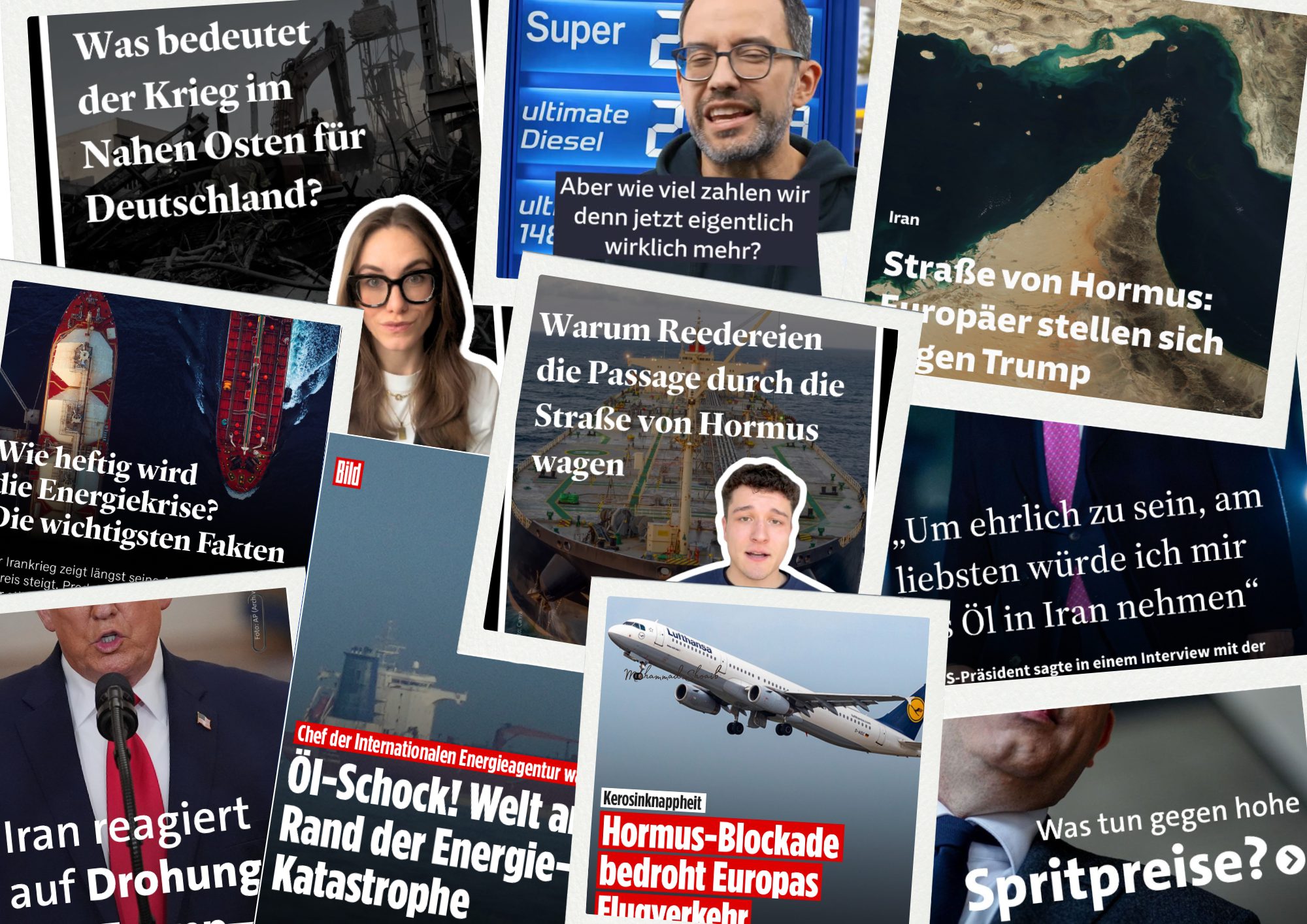
In a nutshell: The tensions surrounding the Strait of Hormuz starkly illustrate just how vulnerable global supply chains really are. Companies are under pressure to act. They must rethink how goods move around the world. In this conversation, supply chain and logistics expert Muhammad Shoaib explains why what we are experiencing is not merely a short-term crisis, but a structural turning point. His message is unambiguous: resilience, diversification and smarter planning are critical today.
A System Begins to Falter
For years, everything followed one clear principle: efficiency. Supply chains were built to move goods to their destination as quickly and cost-effectively as possible. This system frequently relied on a small number of routes and a limited set of Vendors.
That very model is now losing its stability. As tensions grow at critical chokepoints such as the Strait of Hormuz, the risks are becoming increasingly tangible. Routes long considered reliable are suddenly becoming sources of uncertainty.

For Muhammad Shoaib, who has been managing global flows of goods between Asia, Europe and North America for more than ten years, this is unambiguous: this is more than a temporary crisis. "Many people see this as a short-term disruption. I see it as a fundamental shift in how critical trade routes are used and controlled. Global supply chains can no longer rely on a single path."
What was once regarded as neutral is increasingly becoming a strategic lever of power. Trade routes today are part of geopolitical dynamics and correspondingly vulnerable to disruption. "In the past, stability and cost were the focus. Today, geopolitical risk directly determines how and where goods move."
For logistics professionals, this means above all one thing: greater complexity. Companies are responding with diversification. They are developing alternative routes, working with multiple Vendors and increasing their inventory levels. "This makes supply chains more expensive and more complex. That is why a hybrid approach is now taking shape. Efficiency and resilience must be brought into balance. Many companies, however, are still a long way from achieving that."
When Supply Chains Break
When a route fails, everything in a logistics organisation is set in motion. Decisions must be made under intense pressure.
The first step is clearly defined: secure inventory.
"The first priority is to protect the goods. If a route is blocked, we move shipments to the nearest safe port."
Then operational replanning begins.
"In the second step, we organise new routes to get the goods to their destination. In the third step, the focus shifts to longer-term adjustments such as new Vendors and regions."
This illustrates just how much the profession has changed. Supply chain management today is strategic work conducted under uncertainty. "You can no longer look at supply chain decisions in isolation from global politics. Trade routes have become strategic assets."
The End of Just-in-Time
One central shift concerns the prevailing efficiency model itself. The long-dominant just-in-time principle is losing ground. In its place, a new approach is taking hold: just-in-case.
"Just-in-time was the ideal for a long time. Under current conditions, that model is no longer reliably viable."
Companies are increasingly investing in safety stock, alternative sourcing options and contingency plans. At the same time, the pressure to operate efficiently remains high. That is precisely where the challenge lies.
An Industry in Survival Mode
The industry is currently in a transitional phase that Muhammad describes as survival mode.
"This phase will pass. But right now, it is about staying capable of acting."
Smaller companies in particular are under pressure.
"Some e-commerce Vendors will exit the market. Those most likely to survive are the ones that are financially stable or can adapt quickly."
His message is clear: the crisis also presents opportunities. Muhammad explains: "Now is the moment to challenge old patterns and find new ways forward. While some hesitate, others are developing Solutions." In the long run, the companies that will prevail are above all those that are flex

Did you find this article helpful?

How AI Agents Take Over Delivery Scheduling – Insights from the Webinar with ProLogistics
How digital employees relieve teams, speed up the notification process, and reduce transport costs.

Route Optimization & Telematics: Answers from the TIS & PTV Webinar
How the interplay of real-time data and algorithms delivers more stable planning and lower costs.

Transportnetzwerke mit FAP-Daten optimieren - Antworten aus dem even Webevent mit Infios
Über die spannendsten Fragen zu Frachtkostenprüfung, Datenqualität und strategischer Carrier-Steuerung.

Leadership in Modern Logistics
Living and passing on growth – an interview with Lorena Garcia from AUTODOC.