


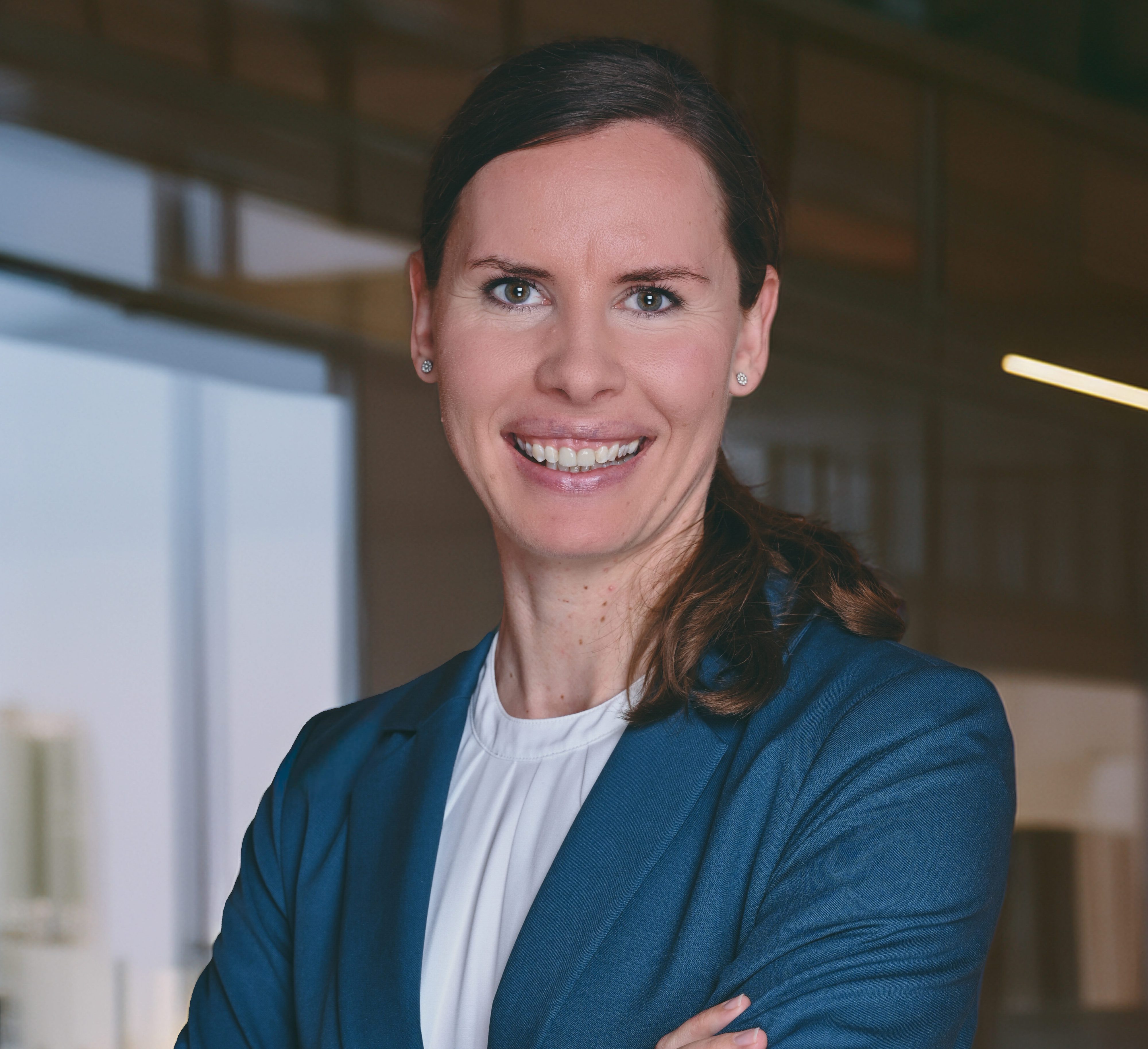
"Culture Instead of Crisis Panic" – Claire Hatton on Motivation in Turbulent Times
On values, leadership and HR as a backbone: Claire Hatton from Meyer & Meyer on culture work.

In a nutshell: The economy is weakening, budgets are tight – and yet companies must motivate and retain their employees. Claire Hatton, Director People & Culture at Meyer & Meyer, explains in this interview how genuine communication, strong values and targeted culture work help retain skilled professionals and foster confidence in the future. Because in economically challenging times, it takes more than good numbers.
Lisa: Claire, the economic situation is strained across industries. How does that manifest concretely for you?
Claire Hatton: We feel the effects very early – particularly in the logistics industry, a downturn in the sales market hits quickly. This also influences our HR work: during upturns, the focus is heavily on recruiting. In economically quieter times, we place even greater emphasis on topics like employee retention and development.
Lisa: And how does the approach to employees' needs change during this period?
Claire Hatton: The desire for financial recognition is legitimate. Employees with longer tenure in particular show a great deal of understanding for economic developments and can anticipate that salary increases are not limitlessly achievable. As a company, however, we don't just want to pay in line with performance. Beyond that, it's important to us to support our colleagues and offer them benefits beyond their wage or salary.
Lisa: How do you handle the discrepancy between performance and a limited budget?
Claire Hatton: We rely on transparency: we explain economic contexts openly and invite shared responsibility. We have a cross-functional, multilingual platform available to all colleagues. It informs, encourages participation and is also used to simplify various employee-related processes. Instead of short-term salary adjustments, we offer development options such as particularly exciting projects, career perspective conversations, individual career plans or health-promoting measures. And sometimes it's also small gestures and ideas – like an employee event or corporate wear featuring our values – actions through which we show appreciation.
Lisa: So you talk a lot about culture and identification. What role does company culture play as an "antidote" to the crisis?
Claire Hatton: A very significant one. With over 120 years of company history, we have a strong culture and deliberately use it as an anchor. Our values compass – covering topics such as personal responsibility, courage and eye-level communication – is not just a paper tiger; it is lived in training sessions, talent programs and in day-to-day communication. This sense of "we" is essential.
Lisa: And how do you measure the success of this culture work?
Claire Hatton: Not yet systematically through a tool, but the groundwork has been laid. And we notice it in everyday life: in our low turnover rate, in constructive conversations, and in the willingness to stand side by side and win together.
Lisa: Is there a limit to how long you can rely on "pulling through together"?
Claire Hatton: Yes, absolutely. You must not overstretch employees' trust. My experience from various professional positions shows: if no improvement is visible after around two years, things become critical. That's why it's important to make every small improvement visible and to strengthen trust through concrete steps forward.
Lisa: What role do managers play in this?
Claire Hatton: A central one. Managers are the key to employee retention. They embody culture, support decisions and motivate their teams. Unconditional trust must exist here – otherwise even the best benefits package won't help. At Meyer & Meyer, for example, we invest specifically in leadership development so that managers can fulfill their role well and provide orientation.
Lisa: Many companies struggle with culture work. What would you advise them?
Claire Hatton: First: define values that are genuinely lived – nothing superficial. Second: communication at eye level and with real listening. And third: actively involve employees. Questions like "What makes us strong?" or "What sets us apart?" help create a sense of identity. Culture is not a project – it is daily work.
Lisa: And how do you personally handle the responsibility of conveying optimism even during such phases?
Claire Hatton: It is our job to be a beacon – to provide orientation, demonstrate attitude and listen. For me, it's important to recharge regularly so that I can genuinely live this positive outlook. Because only then can we bring our colleagues along with us.
Lisa: And finally: what do you personally take away from this economically challenging time?
Claire Hatton: Weaker economic phases are part of every national economy. Our work in HR, however, is only marginally guided by that. What matters to us is being a point of contact, listening and radiating optimism. We in HR are the emotional backbone of the company. That requires clear communication, energy and indeed also courage. Because challenges must be our starting point for improvements and development. At Meyer & Meyer, we carry a pioneering spirit within us. As logistics professionals, we are the strong partner at our customers' side – and therefore also a breeding ground for innovation. That motivates our colleagues to give their best every single day.
Looking for the right solution for your logistics? Here you'll find the comparison platform that makes your search easier.

Did you find this article helpful?
Fifty Fifty – Let's Get It Done
On the perspective of a senior leader and Executive Coach on diversity and structural barriers – an interview with Maj-Britt Pohlmann.
Sustainability and Logistics – A (Beginner's) Practical Guide to Circular Economy for Logistics
The future of logistics is no longer a straight path — it's a circle. This practical guide helps you take your first steps into the loop.

Automation projects – but make it work
Why people make the decisive difference. An interview with Thomas Bale from Xvise.
Developing Skilled Workers – Secure Up to 100% Funding
How DACHSER and WBS TRAINING benefit from the German Qualification Opportunities Act.