


Between Crisis and New Beginning – Interview with Christian Körner from Oceansapart
The Head of Logistics talks to us about the fashion company's insolvency and the acquisition by Snocks.
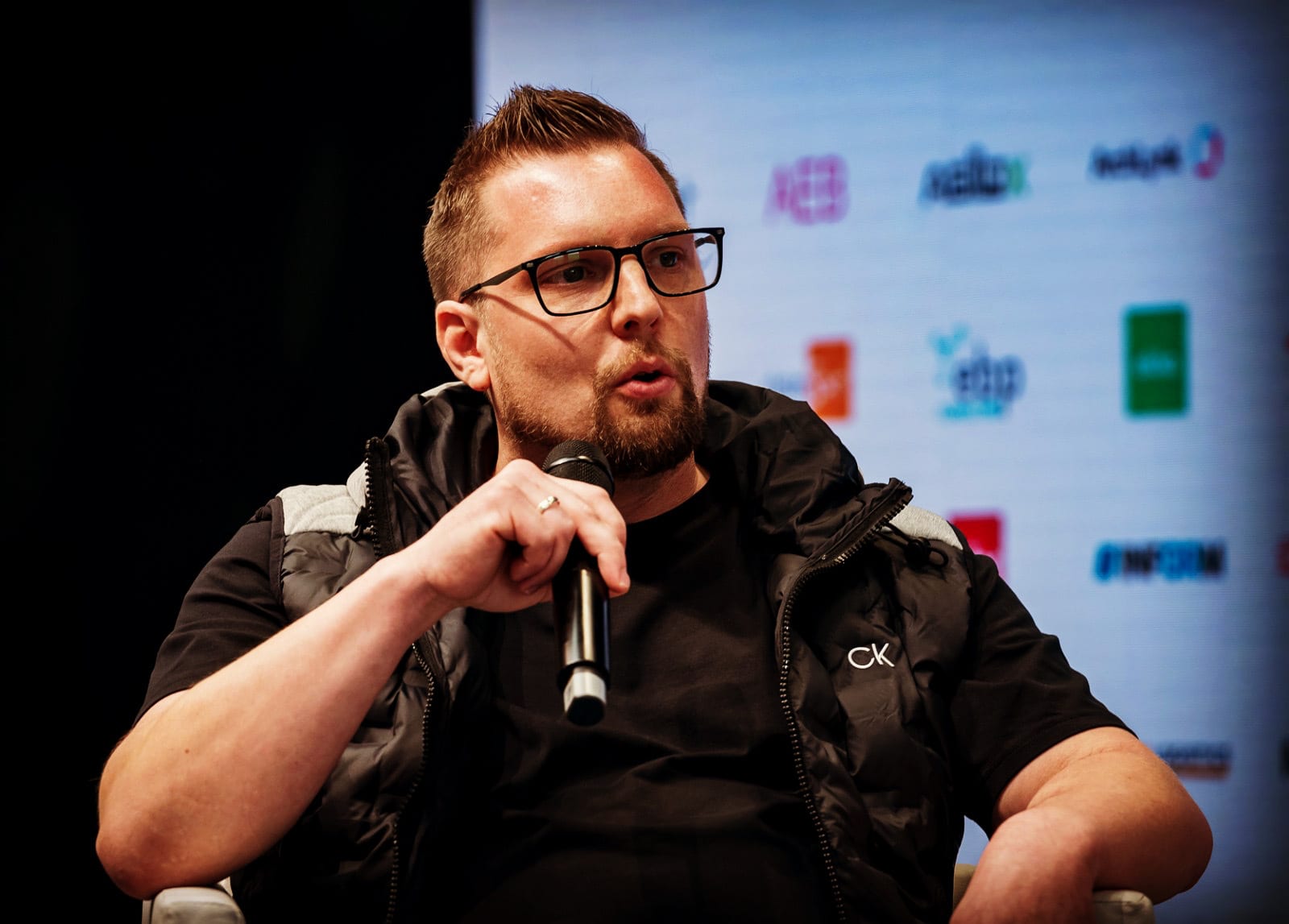
Christian Körner knows operational responsibility from all perspectives: From postal carrier to Head of Logistics, he has worked his way through almost every stage of e-commerce logistics. As Head of Fulfillment and Supply Chain at Oceansapart, he was most recently on the front line when the D2C brand ran into financial difficulties – and experienced first-hand what it feels like when warehouse processes that have just gone live have to continue running in insolvency mode.
I spoke with Christian about how to lead a team through three months of uncertainty, how operational decisions are made in acute uncertainty, and what personally helped him remain able to act during this time. He also reveals why Oceansapart still relies on 3PL and how to select the right logistics partner, especially in a volatile environment.
A conversation about crisis management, team spirit, and why continuing to work is sometimes the bravest decision.
Pia: Christian, can you still remember the moment when you sensed that Oceansapart was getting into trouble?
Christian Körner: Yes, definitely, we always had transparency about the numbers. But until 2022, they were always very positive. There was constant growth, we always achieved new records. There were days like Black Friday when we had 80,000 orders in a single day – really great results. And then came the Ukraine crisis, rising inflation and with it consumer reluctance to spend. And then the numbers suddenly started going backwards. I think a lot of companies had to go through that.
Pia: But it seems to have hit you particularly hard. Why was that?
Christian Körner: The problem was that we naturally kept expecting things to go upwards – and had extremely large quantities of goods in advance procurement. And these are processes that can easily take nine months. And during this time, your warehouse gets fuller and fuller and your sales decline. Plus: Your costs rise. That created considerable pressure. And yes, the first signs that things were really going downhill were that you obviously had to fight hard to get investor money. Before, we could still easily finance ourselves, in 2023 we could at least still pay from petty cash. But in 2024 it clearly went in the direction of us being dependent on investor money. And then the CFO also changed – in my experience always a bad sign.
Pia: How did you react to these developments?
Christian Körner: Despite everything, we were initially still relatively confident. We changed warehouses, set up a new shop system, cleared the warehouse and got rid of legacy issues. We had a very, very good strategy for how we wanted to achieve the turnaround. But apparently that came too late. The investors then pulled the plug on us. A promised injection of capital didn't materialize. And that then led to the company sliding into insolvency.
Pia: What went through your mind when you found out that it was actually going into insolvency?
Christian Körner: That was of course a huge shock. I still remember very well how our CEO told us. I had just finished the go-live in the warehouse a month earlier. Anyone who has ever been through such a warehouse change knows how much blood, sweat and tears go into it. You're actually happy that you can finally get started and tackle process optimization. And then the rug is pulled out from under you. You first have to collect yourself for a few days to recover and develop motivation again.
Pia: But still, you have to function immediately, right?
Christian Körner: Exactly. Simultaneously with the start of insolvency, a completely new mode kicked in. We de facto no longer had an account and therefore no way to pay our suppliers. I had just brought three new partners on board with the warehouse change and we had many other suppliers we had been working with for years. Then having to tell them: "Sorry, we're now insolvent" – those were tough conversations.
Pia: I can imagine. How did the suppliers react to that?
Christian Körner: I was impressed by how much understanding came from the suppliers. It was nice to hear that many were still willing to continue working with us. Then we had to somehow try to establish new payment flows. We received orders, which meant we continued to sell. But we obviously have to pay our logistics provider so they ship the packages. So: first collect money, with a new account. From this money the warehouse was then paid, which in turn packed the packages. But we couldn't ship them because we first had to collect money again to pay the carriers. Only then could the packages be shipped. And as soon as the money was gone again, the warehouse stopped again for the time being.
Pia: What were you still selling through?
Christian Körner: Marketing measures were of course no longer possible. No influencers, no ads. We sold purely organically through our Instagram channel. And then you have a huge marketing team that de facto has nothing to do. Other departments, like Finance or HR, didn't know what to do with the work. These were processes that were completely new for everyone. At some point the account got a bit fuller again and we could also pay the logistics provider and the carriers a week in advance. This slowly introduced a mode in which we could at least work somewhat normally again.
Pia: But at the same time there was still this uncertainty, right?
Christian Körner: Yes, the uncertainty was there the whole time. Everyone had the same question: "What happens now?" You know: You get insolvency pay from the employment office, so the complete net salary for the next three months. But then what? Nobody knew how things would continue. The only information from the insolvency administrator was that we had to find a new buyer.
Pia: And how did the team deal with that?
Christian Körner: Some very good people left or let themselves be poached, which I completely understand. For me the question was then: Do I want to give up here already? I then decided for the time being, I'm staying. I want to go through this crisis with my suppliers, whom I had also just recently acquired, and support my team in looking forward.
Pia: How did things continue?
Christian Körner: We had several investor meetings where we were really grilled. And at some point the news came that we had found a buyer. That was the moment when we all gained hope again. But then came the next shock: End of September was day X, when it was announced that only a core team could stay – of 120 employees, only 36 were taken over. I don't even know if or how you can moderate something like that well – after all, you can't conduct 84 individual conversations, but have to tell everyone at the same time. There was a small reception afterwards, many left immediately, some stayed, but the mood was very somber.
Pia: That must have been really tough.

Did you find this article helpful?

From Excel Chaos to Scalable Fulfillment – Answers from the even Webinar with storelogix & Cella
Covering the most interesting questions on configuration, updates, and go-live speed.

What You Should Know About 3PL and Why It's Worth a Closer Look
Opportunities, limitations and practical tips for anyone looking to outsource logistics.
Black Friday and Its Impact on the Logistics Industry
Shopping ecstasy for some, logistical challenge for others.
"I'm building Germany's largest logistics empire"
How a young founder is rethinking logistics - with Leon Michel, CEO of fly fulfillment GmbH.