


Leadership Under Pressure: A Conversation About Doubt, Change, and Attitude – with Career Coach Christian Runkel
The uncertainties behind the claim to leadership – and how to deal with them.

In a nutshell: On LinkedIn, the conversation is usually about success, ambition, and strong positions. Doubt? It appears at best as a dramatic device – rarely as honest, vulnerable insight. Career coach Christian Runkel says: "Doubt, uncertainty, and fear are everyday experiences – yet they're hardly ever talked about." In over 400 conversations with leaders from the logistics industry, he has witnessed just how deeply entrenched the taboo around discussing uncertainty really is.
In an interview with even, he explores when doubt is a warning signal – and when it becomes a development tool. He explains why many leaders don't doubt their own teams, but rather the system above them. And he shows how uncertainty can be understood as part of a reflective career journey.
Doubt in Everyday Life: More Than a Vague Feeling
Whether it's about assertiveness, resilience, or one's own standing within an organization – doubt tends to creep in precisely where leadership demands the most of us. "Sometimes all it takes is one situation where I can't get my point across", says Runkel. "Can I assert myself? Can I stay the course, even when things don't work out straight away?" – these are questions that recur throughout many of his conversations with leaders.
Things become particularly critical when a sense of being overwhelmed takes hold – a phenomenon he has noticed with increasing frequency since late 2023. The causes? Often complex. While external factors such as political upheaval or technological developments play a role, personality lies at the heart of it: "The way we handle uncertainty is strongly shaped by our socialization – in our families, schools, and careers", he explains.
The Inner Saboteur in All of Us
Runkel refers to it with a knowing smile as the "inner saboteur" – that inner voice that whispers: This isn't going to work anyway. Everyone knows it. And yet many act as though it isn't there. "Anyone who claims they don't have it is either narcissistic or not being honest with themselves", he says.
This voice speaks up most loudly when we're on uncertain ground – such as when facing new tasks, uncomfortable topics, or situations where we've had bad experiences in the past.
Thoughts begin to spiral: Am I good enough? Will I manage this? Do I have the right skills?
Runkel says: That's human. But it helps to recognize it – and to strip it of its power.
Am I Even Cut Out for Leadership?
At some point, many leaders ask themselves: Am I in the right place? Runkel recommends an honest self-assessment – with questions such as: Do I genuinely care about people? Have my greatest successes come from working alone or as part of a team? Do I achieve my goals better with others – or do I prefer working independently?
This kind of reflection helps to better understand one's own attitude toward leadership.
"It's not about answering these questions correctly – but honestly", he says. At the same time, he emphasizes: leadership ability has less to do with management skills than many people think. And: doubting your own suitability is not necessarily a sign of incompetence – it is often an expression of a values conflict or a mismatch between person and role.
Those who realize that their current role no longer fits their personal development often face another question: Do I leave – or do I stay?
When Doubt Grows: Escape or Development?
"Every two to three years, you should consciously reflect on your career", says Runkel. Doubt can serve as a catalyst for this – as long as it is not the sole motivation for change. Anyone who changes jobs driven by an inner desire to flee risks falling into the same trap all over again.
His term for it: "flight motivation" – and it rarely leads to a genuine solution. His advice: analyze first, then act. What went well, and what didn't? What values matter to me? And: where do I want to be in ten years?
Leadership Also Means: Leading Upward
One point that many overlook: doubt doesn't only arise in dealings with one's own team – but also in the relationship with the next level of leadership above. "Most of the conflicts I encounter aren't with employees – but with direct line managers or the organizational level above", explains Runkel.
When strategic decisions don't align with one's own values, leaders come under pressure. This too can trigger thoughts of moving on – or the feeling of being stuck in a professional dead end.
What to Do When a Change Becomes Necessary – or Is Forced Upon You?
Not every change begins with a personal decision. Particularly in the freight forwarding environment, Runkel is currently observing a growing number of separations at the top management level – often abrupt, often leaving those affected without a clear way forward. "Experienced leaders are being handed responsibility – and then discarded shortly afterwards", is how he describes the dynamic.
In moments like these, it is crucial not to react hastily, but to pause. What helps then? A clear look back – and a realistic look forward. Runkel speaks of reflecting on the past and taking stock of where you stand as the foundation for any decision. Where did your own success lie up to now? In what kind of environment were you able to make an impact? Which roles suited you – and which didn't?
"It's about not simply grabbing for the next best thing, but consciously shaping what should come next", he says. Conversations with a neutral sparring partner can be invaluable here – someone who both understands the market and can identify personal patterns.
Between Self-Criticism and Visibility: Women in Leadership
Differences between the genders? Yes, says Runkel – particularly in self-perception. Women are often more reflective, but also more self-critical. "They don't always make use of their potential – and they market themselves too rarely", is his observation.
Why is that? "The inner saboteur tends to be louder in women than in men", he believes – and that is also linked to socialization. At the same time, the issue is not a lack of role models – rather, it comes down to looking inward rather than outward

Did you find this article helpful?

Leadership in Modern Logistics
Living and passing on growth – an interview with Lorena Garcia from AUTODOC.
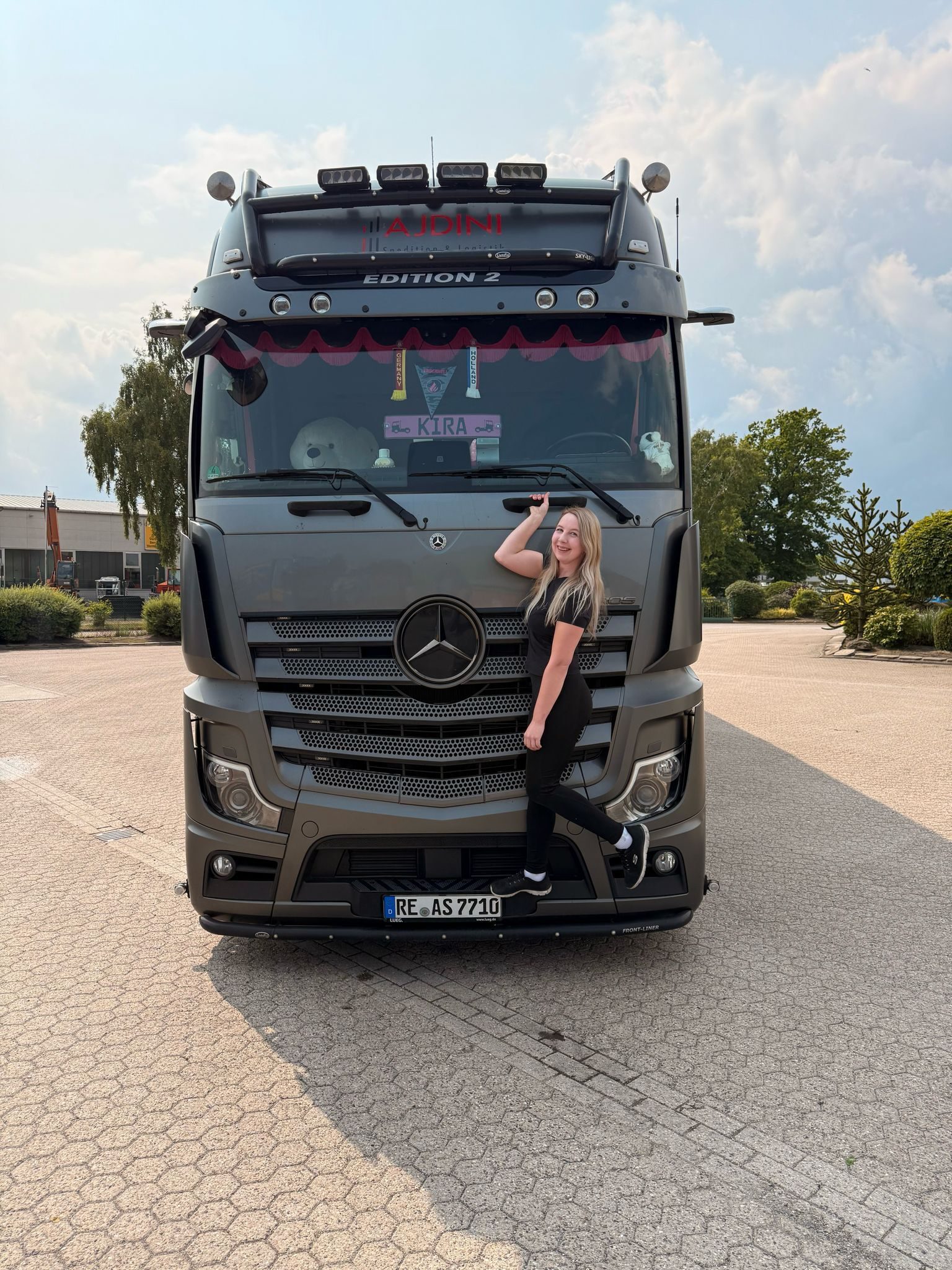
Blonde, 1.60m tall, woman at the wheel – Kira breaks the stereotype
Insights into the life of a long-haul truck driver: An interview with Kira Ölkers.

Technological Openness and Its Limits
On the challenges of the mobility transition between market logic, planning certainty, and political responsibility.

Sustainability and Logistics - The CO2 Share of Logistics
How large is the CO2 share of logistics? An attempt at an answer that is not entirely straightforward.