


Automated Warehouse Systems
AKL, shuttle, cube storage, vertical lift or robots: we show you which automated warehouse systems exist, what they are suited for and how to find the right one for your warehouse.
 Top report
even Report #2: Everything about automated small parts storage systems
Know-How and Know-Why for logistics decision-makers on the topic of automated small parts warehouses: Download for free now!
View now →Reports on this topic



Webevents on this topic






Matching solutions (123)
View all solutions → Hardware
 Sereact Pick and PlaceSereact5.0(3)
 Hardware
 AutoStore™AutoStore™4.6(7)
 Hardware
 AGILOX ONEAGILOX5.0(2)
 HardwareAGILOX OCFAGILOX5.0(1)
 Hardware
 PowerCubeJungheinrich5.0(1)
 HardwarejustPick: Automatische Einzelstück-Kommissionierung für AutoStore und ShuttlesystemeNomagic5.0(1)
 HardwareEKX 514a / 516ka / 516aJungheinrich4.7(1)
 Hardware
 STOROJET automatisches KleinteilelagerStorojet GmbH4.7(1)
 HardwarejustInduct: Robotergestütztes Beladen von TaschensorternNomagic4.3(2)
 Hardware
 HERBIE MCarrybots GmbH4.3(2)
 Hardware
 "Goods on Hanger" Lösungen für die IndustrieTransitic Systems GmbHNo reviews yet
 Hardware
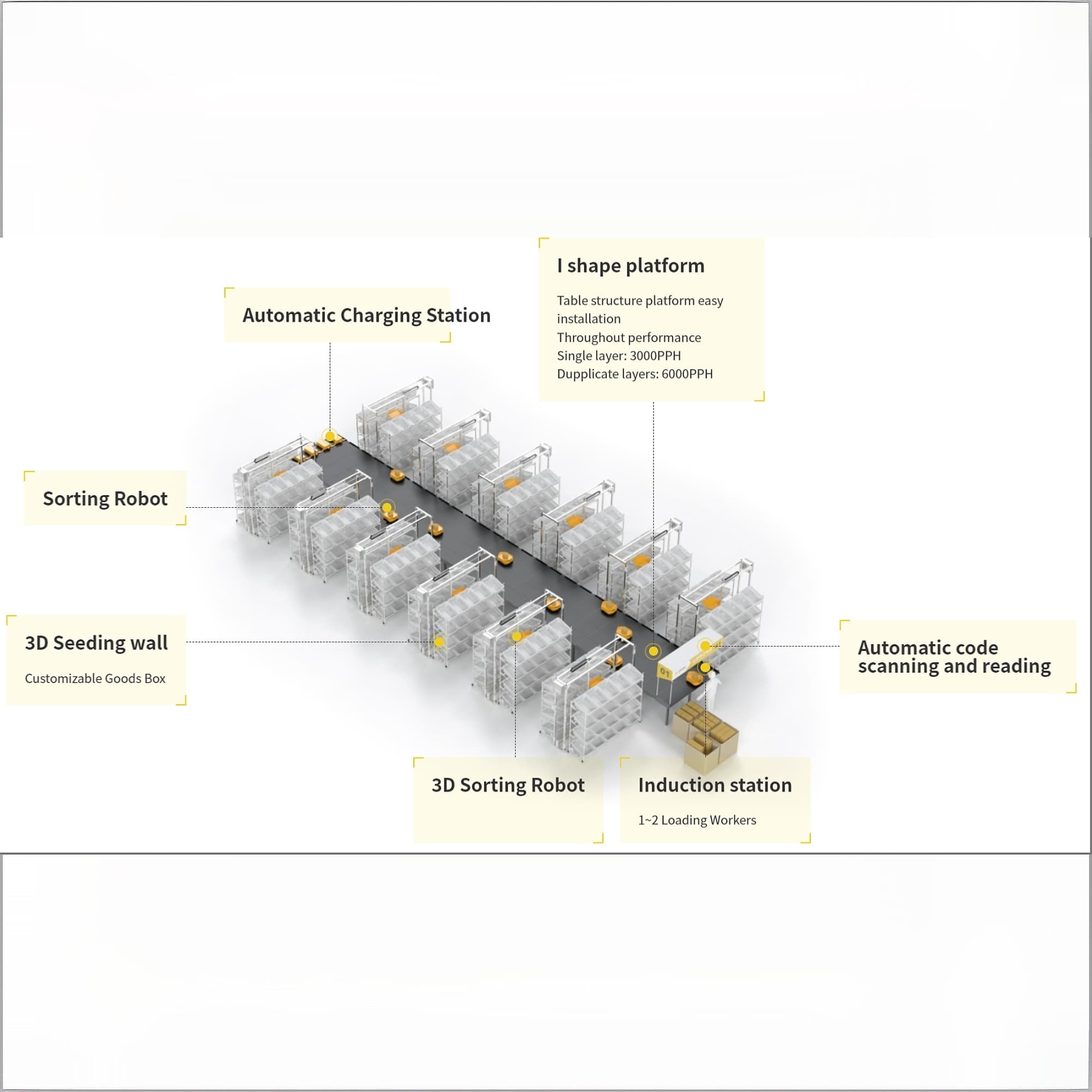
 3D sorting solutionsLibiao RoboticsNo reviews yet
Articles on this topic
All articles →
What Automated Warehouse Systems Are There?
An overview of the most common automated warehouse systems.

How do you choose the right warehouse system?
Via data, clear goals and the right strategy to the optimal warehouse solution.
Who Are Automated Small Parts Warehouses Suitable For?
How AKLs work, what advantages and disadvantages they offer, and which industries can benefit from them.
The AutoStore System in Detail: Components, Partners, Planning – A Guide for Decision-Makers
Understanding AutoStore: Everything about robots, ports, planning and integrators – for logistics managers, IT managers and project planners

Planning Shuttle Warehouse Systems the Right Way – Answers from the even Webinar with RocketSolution
Shuttle warehouses are often planned based on gut feeling – yet it is concrete metrics that determine success or miscalculation.

Wann lohnt sich Lagerautomatisierung? Kosten, ROI, Entscheidung
Ob sich Lagerautomation rechnet, hängt von Kosten, Prozessen und Wachstum ab. Artikel zeigt ROI‑Logik, Schwellen und Alternativen.

TCO in Intralogistics: Operating Costs Determine ROI
About maintenance, energy, updates and service life, and why they shape the business case.
Service and Maintenance for Automated Warehouse Systems: What Really Matters
On selecting the right support contracts and the importance of predictive maintenance.

Mobile Transport Robots: Relevance to Challenges
Are AMRs and AGVs revolutionizing modern logistics?
Terms on this topic
To the glossary →- Automatisches Kleinteilelager (AKL)
- The Automated Small Parts Warehouse (AKL) is a fully automated storage system for totes, trays and small parts, in which storage and retrieval operations are performed without manual intervention by stacker cranes or shuttle systems.
- Cube-System
- A cube system is a high-density, grid-based storage system in which bins are stacked in a three-dimensional grid and moved by robots. It is particularly suited for small to medium-sized items with high throughput in limited storage space.
- AutoStore-Lagersystem
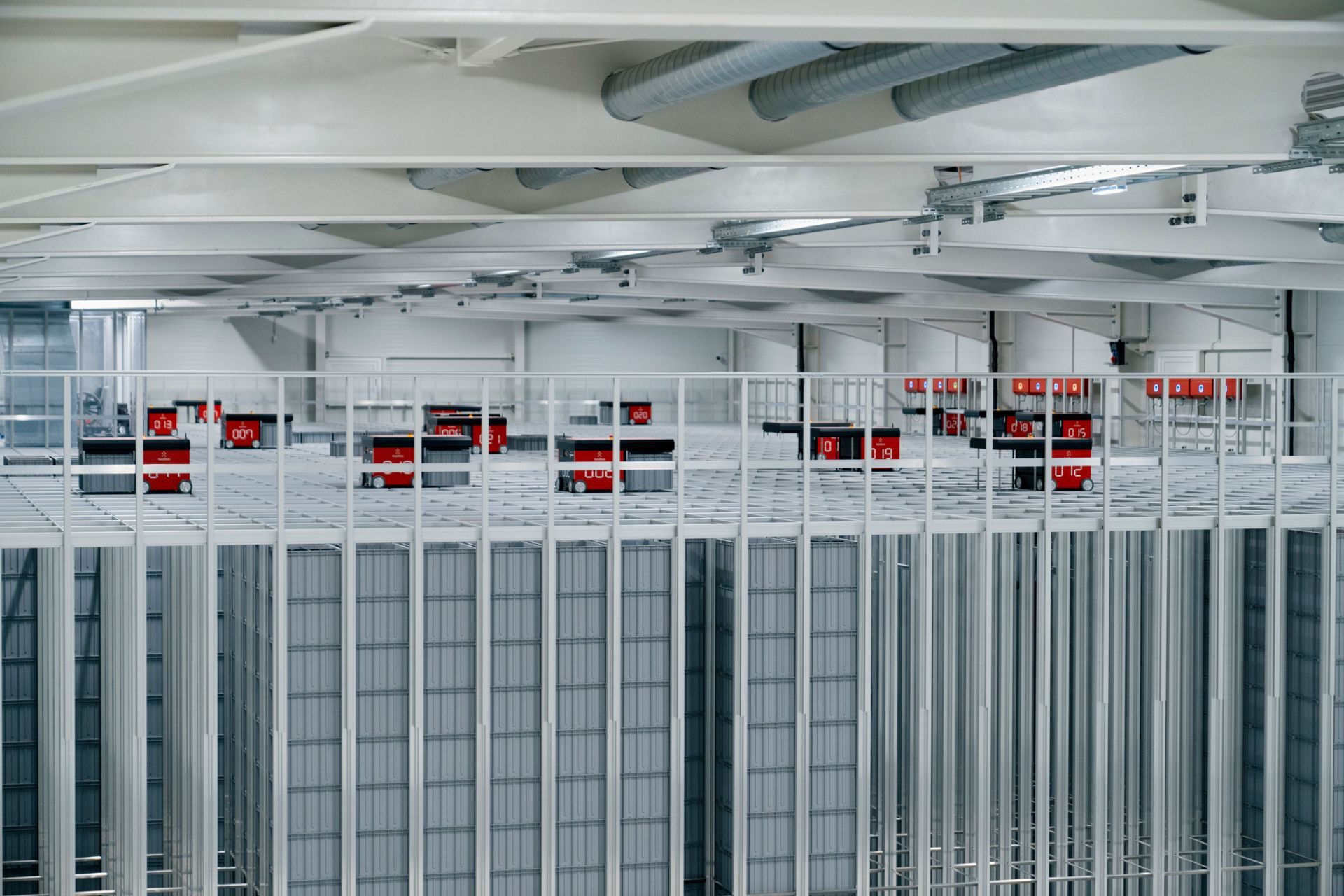
- The AutoStore storage system is a fully automated cube storage system in which robots stack, retrieve, and transport plastic bins across a three-dimensional grid structure to stationary picking stations.
- Grid
- A grid is the spatial raster structure of a cube-based automated storage system, in which bins are stacked on top of one another and moved by robots. It defines the capacity, footprint, and scalability of the entire system.
- Regalbediengerät
- An automated storage and retrieval system (AS/RS) is an automated machine that transports loads horizontally and vertically within an aisle of a high-bay warehouse to perform storage and retrieval operations.
- Lagerlift
- A vertical lift module (VLM) is a vertical, automated storage system that stores goods on trays or in drawers stacked within an enclosed shaft, delivering them to a retrieval window at the touch of a button or via a software command.
- Karusselllager
- A carousel storage system is an automated goods-to-person system that cyclically moves storage locations on a revolving carrier to the retrieval point. There are horizontal and vertical designs, which differ in terms of space requirements, item structure, and throughput demands.
- Hochregallager
- A high-bay warehouse is an automated storage facility with racking from approximately twelve meters in height, where stacker cranes automatically store and retrieve pallets.
- AMR
- AMR (Autonomous Mobile Robot) is a driverless, self-navigating transport robot that moves goods within a warehouse without any fixed installed infrastructure. It orientates itself independently using sensors and digital maps, and dynamically avoids obstacles.
- Fahrerloses Transportsystem (FTS)
- An Automated Guided Vehicle system (AGV system) is a system of automated industrial vehicles that transport goods independently within buildings or on company premises, without any manual vehicle operation.
- Kommissioniersystem
- A picking system is the coordinated interplay of warehouse technology, IT, conveyor technology, equipment, and processes that organizes and controls the retrieval of goods from a warehouse for order fulfillment. It forms the operational core of every order execution within the warehouse.
- 3D-Matrix Solution
- A 3D matrix solution is a multi-dimensional storage and buffer system that dynamically manages load units in the X, Y, and Z directions, enabling significantly higher space utilization than conventional systems.
About this topic
An automated warehouse system stores goods and brings them to the workstation without any walking routes. There is no single best system. Which one fits depends on your product range, your throughput, your building and your budget. On this page you will find all common systems compared, along with reports, Webinars and Vendors.
Which automated warehouse systems are there?
Most systems operate on the principle of goods to person: employees do not walk to the shelf. Instead, bins, trays or entire shelves come to the workstation. The main differences lie in storage density, speed and how easily a system can be expanded later.
| System | How it works | Strong at | Things to consider |
|---|---|---|---|
| Cube Storage (e.g. AutoStore) | Bins are stacked in a grid, robots on the roof retrieve them | very high storage density, many small items, modular expansion | high investment, access to bins stored deep down takes longer |
| Automated Small Parts Warehouse (AKL) | Stacker cranes store and retrieve bins or cartons in fixed aisles | large assortments of small parts, high capacity, precise access | fixed aisles, complex integration into existing facilities |
| Shuttle System | Shuttles travel on rails at every shelf level, lifts connect the levels | high throughput, fast access, scaling via additional shuttles | complex control systems, more maintenance |
| Shelf to Person | Robots drive entire shelves or compartments to the picking station | short travel distances, ergonomics, fast commissioning | lower storage density, dependent on stable software |
| Autonomous Case-handling Robots (ACR) | Autonomous robots retrieve bins directly from the shelf and bring them to the station | flexible deployment in existing operations, easy scaling | high initial investment, vulnerable to IT disruptions |
| Vertical Lift Module (VLM) | A lift inside a tower delivers trays on demand to an access opening | small footprint, high ceilings, secure storage | limited suitability for large goods, throughput per lift is limited |
| Carousel / Horizontal Carousel | Shelves or compartments rotate and bring the item to the retrieval point | fast access to frequently needed items, small floor space | inflexible with highly fluctuating stock levels, maintenance |
| Tray Storage System | Goods are placed on trays and automatically conveyed to the station | heavy or sensitive goods, vertical use of floor space | difficult to adapt when requirements change significantly |
How to find the right system
Before comparing Vendors, it is worth taking an honest look at your own data. These questions narrow down the selection most quickly:
- Product range: How large, heavy and sensitive are your items? Do they fit into standard bins?
- Volume framework: How many items and bins do you store, and how many accesses do you have during peak hours?
- Building: How much floor space and clear height do you have? Do you need to make changes during ongoing operations?
- Growth: Should the system be able to grow later, for example through more robots or additional storage locations?
- Costs: Not just the investment matters. Maintenance, energy, spare parts and software determine whether the system pays off.
- Software: Which WMS currently controls your warehouse, and how will the new system be connected?
- Clarify processes and data first, then choose the system.
- Storage density, throughput and scalability can rarely all be maximised at the same time.
- Operating costs over the lifetime determine the ROI, not just the purchase price.
- Integration with WMS and control systems must be part of the planning from the very beginning.